I Play: 3D Soccer
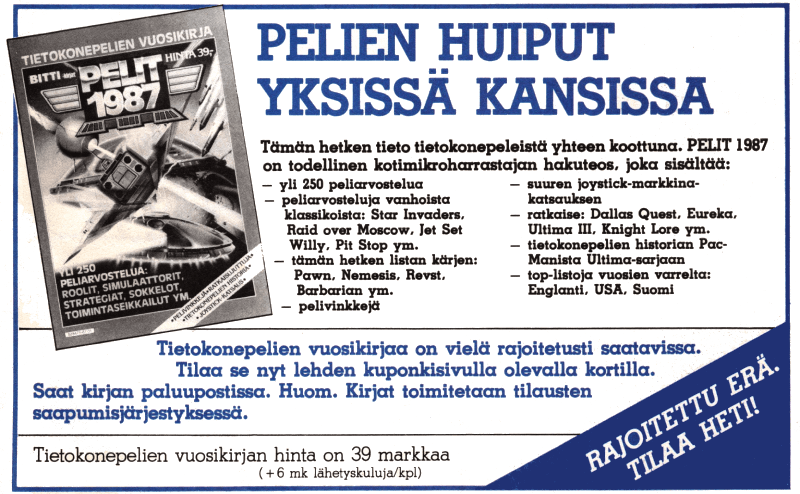
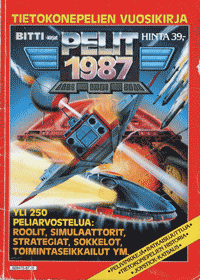
Pelit was a Finnish-language (bi)annual book series published from 1987 to 1991 containing gaming-related articles, tips and most importantly game reviews. Here you can find all the reviews from the books. The reviews were originally written in Finnish; the English versions are translations of the Finnish originals. Maininta tekijänoikeuksista
 1987
1987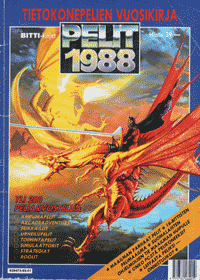 1988
1988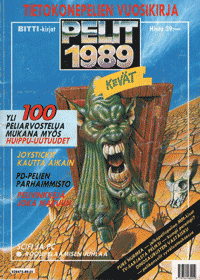 1989 Kevät
 1989 Syksy
 1990 Kevät
 1990 Syksy
 1991 Kevät
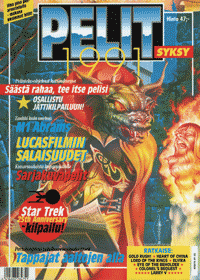 1991 Syksy
I Play: 3D Soccer

I Play: 3D Soccer1991 SyksyPysyvä linkkiMicroProsen ja Red Ratin yhteistyönä valmistunut International Soccer Challenge kokeili ensimmäisenä kolmiulotteisen jalkapallopelin mahdollisuuksia, siinä kuitenkaan kovin hyvin onnistumatta. Nyt on lähes tuntemattoman Simulmondon vuoro pilkulla.
Italialainen Simulmondo kehuu peliä käsikirjassa ensimmäiseksi jalkapallosimulaattoriksi. Paljon muuta järkevää manuaalista ei saakaan irti. Käsikirja on kerrassaan hirvittävä, eikä varmasti anna hitustakaan hyödyllistä informaatiota muille kuin niille, jotka taitavat italiaa sen verran, että voivat lukea manuaalin italiankielisen osuuden.
Pelin latauduttua ensimmäisenä esiin ilmaantuu laatikko, josta ei puhuta manuaalissa yhtään mitään! Joystickillä voi toki liikutella palkkia pitkin joukkueiden nimiä ja nappia painamalla nimen viereen tulee joystickin tai tietokoneen kuva ja numeroita. Vaikka sitä ei missään sanotakaan, valitaan näin pelaajan kontrolloima joukkue ja onko kyseessä peli tietokonetta vastaan vai toista ihmistä.
Joukkueen nimen voi muuttaa haluamakseen, mutta missään ei vain kerrota miten. Leikkimällä näppäimistön kanssa löytää muutamia muitakin toimintoja, joista ei puhuta. Loppujen lopuksi O-kirjainta painamalla pääsee kopiosuojaukseen, jossa peli kysyy manuaalista sanaa joltain sivulta. Suojauksen jälkeen tulee toinen valintaruutu, jossa valitaan pelin nopeus, pelin pituus, mitä paikkaa pelaaja pelaa, voiko paikkaa muuttaa kesken pelin ja paljon muuta. Tässä vaiheessa käsikirjakin jo tietää missä mennään.
Simulaattorimaisesti erilaisia toimintoja pelin aikana piisaa joka lähtöön. Kick Off-maisen tutkan saa päälle raivoisan käsikirjan selaamisen jälkeen; toimintanappuloita ei ole mitenkään ryhmitelty, vaan ne lukevat pienellä präntillä muun tekstin seassa. Uusinta toimii vain Amigoissa, joissa on YLI mega muistia. Pelin jälkeen saa valita katsooko uusintana pelin ensimmäinen vai toisen puoliskon, ensimmäisen vai toisen jatkoaikapuoliskon tai rangaistuspotkukisan. Uusinnan aikana joystickillä voi vapaasti liikkua pitkin kenttää ja katsella toimintaa mistä kulmasta tahansa. Nappulaa painamalla kamera siirtyy sillä hetkellä ohjaamasi miehen taakse, ja nappula pohjassa joystickiä liikuttamalla kamera siirtyy muiden pelaajien taakse.
Peli on toteutettu sekoittamalla spriteja ja vektorigrafiikkaa. Pelaajat ovat spritejä, ja kenttä on vektorigrafiikkaa. Näin voit kääntää pelaajasi mihin suuntaan tahansa. Joystickistä löytyy huima määrä erilaisia toimintoja, vaikka niiden käyttäminen pelin tuoksinassa onkin aluksi erittäin vaikeaa. 3D Soccer tarjoaa myös mainion kaksinpelin, jolloin ruutu on jaettu vaakasuoraan kahtia. Tällöin pelin tempo hidastuu lähes puoleen, kun Amiga joutuu tekemään laskutoimituksia kaksi kertaa enemmän. Kahden taitavan pelaajan kamppailu on kuitenkin upeaa seurattavaa.
Pelattavuudessa ei ole ihmeemmin valittamista, joskin ohjailuun ja perspektiiviin tottuminen vie aikansa. Äänet eivät pelin aikana ole kovinkaan kummallisia, muutama tömäys ja kohinaa. Pelin alkumusiikkina on mainio discoralli. Kokonaisuudessaan I Play:3D Soccer on Simulmondolta hyvä esitys ja paras jalkapallopeli laatuaan.
I Play: 3D Soccer1991 SyksyPermalinkInternational Soccer Challenge, a joint effort by MicroProse and Red Rat, was the first to try out the possibilities of a three-dimensional football game, though without much success. Now it's the turn of the almost unknown Simulmondo to step up to the penalty spot.
In the manual, the Italian Simulmondo boasts that the game is the first football simulator. You won't get much else of any sense out of the manual. The manual is downright dreadful, and it certainly won't give a shred of useful information to anyone except those who know enough Italian to read the Italian-language section of it.
Once the game has loaded, the first thing to appear is a box the manual says absolutely nothing about! Sure, you can move a bar up and down the team names with the joystick, and pressing the button brings up a picture of a joystick or a computer next to the name, plus some numbers. Although it isn't stated anywhere, this is how you pick the team the player controls and whether the match is against the computer or another human.
You can change the team's name to whatever you like, but nowhere does it actually say how. By fiddling about with the keyboard you'll find a few other functions that aren't mentioned either. In the end, pressing the letter O takes you to the copy protection, where the game asks for a word from some page of the manual. After the protection comes a second selection screen, where you choose the game speed, the match length, which position the player plays, whether the position can be changed mid-match and much more. By this stage even the manual knows what's going on.
In true simulator fashion there are functions galore during play, something for every occasion. A Kick Off-style radar can be switched on after some furious leafing through the manual; the control keys aren't grouped in any way, they're just printed in small type among the rest of the text. The replay only works on Amigas with MORE than a meg of memory. After the match you can choose whether to watch a replay of the first or second half, the first or second half of extra time, or the penalty shoot-out. During the replay you can move freely around the pitch with the joystick and watch the action from any angle you like. Pressing the button moves the camera behind the man you're controlling at that moment, and moving the joystick with the button held down moves the camera behind the other players.
The game has been built by mixing sprites and vector graphics. The players are sprites and the pitch is vector graphics. This way you can turn your player in any direction. The joystick packs a staggering number of different moves, although using them in the thick of the game is extremely difficult at first. 3D Soccer also offers a splendid two-player mode, with the screen split horizontally in two. The pace of the game then drops to almost half, as the Amiga has to do twice as many calculations. Still, a battle between two skilled players is a great thing to watch.
There's not much to complain about in the playability, though getting used to the controls and the perspective takes a while. The sound during play is nothing much to write home about, a few thuds and some hiss. The title music is a splendid disco ditty. All in all, I Play:3D Soccer is a good showing from Simulmondo and the best football game of its kind.