4D Sports: Boxing
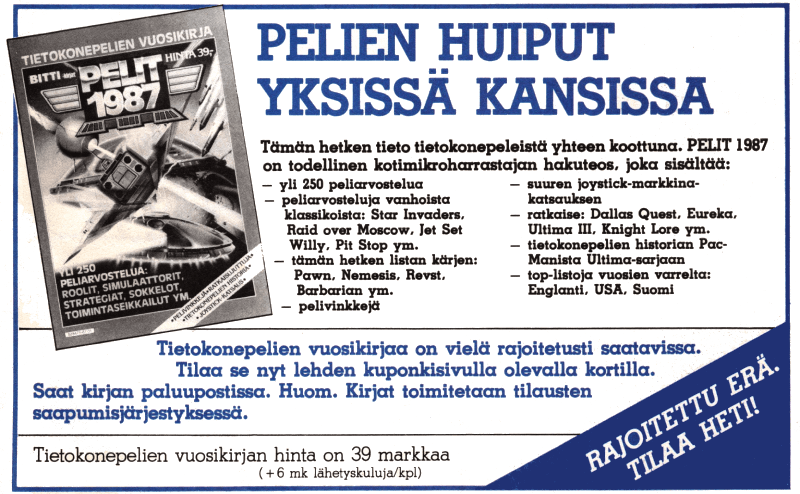
Pelit was a Finnish-language (bi)annual book series published from 1987 to 1991 containing gaming-related articles, tips and most importantly game reviews. Here you can find all the reviews from the books. The reviews were originally written in Finnish; the English versions are translations of the Finnish originals. Maininta tekijänoikeuksista
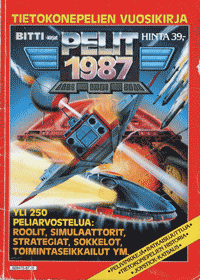 1987
1987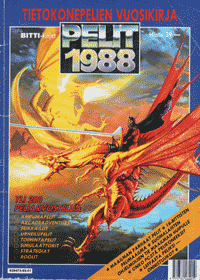 1988
1988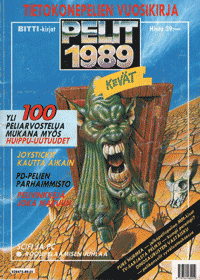 1989 Kevät
 1989 Syksy
 1990 Kevät
 1990 Syksy
 1991 Kevät
 1991 Syksy
4D Sports: Boxing
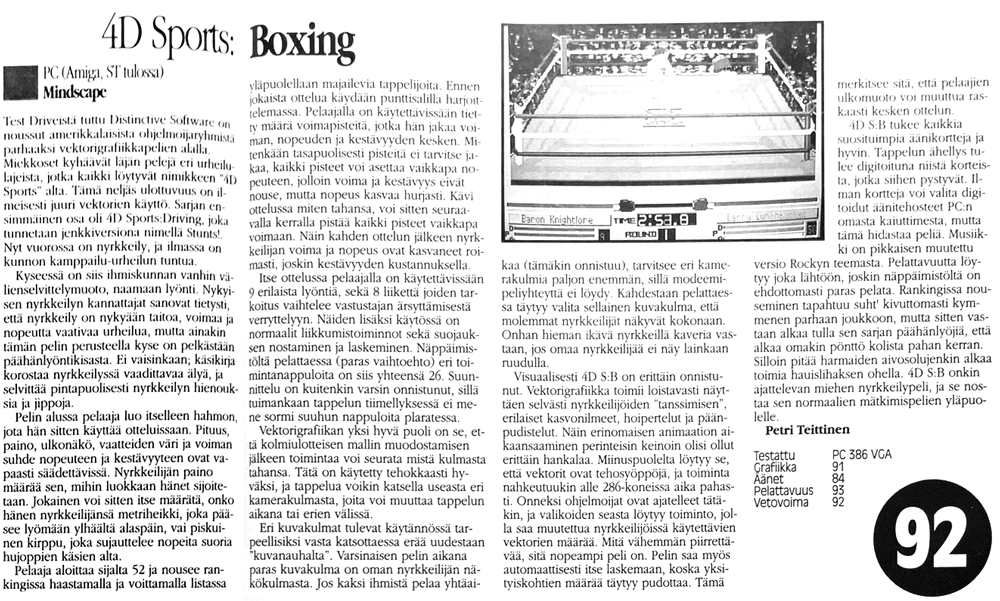
4D Sports: Boxing1991 SyksyPysyvä linkkiTest Driveistä tuttu Distinctive Software on noussut amerikkalaisista ohjelmoijaryhmistä parhaaksi vektorigrafiikkapelien alalla. Miekkoset kyhäävät läjän pelejä eri urheilulajeista, jotka kaikki löytyvät nimikkeen "4D Sports" alta. Tämä neljäs ulottuvuus on ilmeisesti juuri vektorien käyttö. Sarjan ensimmäinen osa oli 4D Sports:Driving, joka tunnetaan jenkkiversiona nimellä Stunts!. Nyt vuorossa on nyrkkeily, ja ilmassa on kunnon kamppailu-urheilun tuntua.
Kyseessä on siis ihmiskunnan vanhin välienselvittelymuoto, naamaan lyönti. Nykyisen nyrkkeilyn kannattajat sanovat tietysti, että nyrkkeily on nykyään taitoa, voimaa ja nopeutta vaativaa urheilua, mutta ainakin tämän pelin perusteella kyse on pelkästään päähänlyöntikisasta. Ei vaisinkaan; käsikirja korostaa nyrkkeilyssä vaadittavaa älyä, ja selvittää pintapuolisesti nyrkkeilyn hienouksia ja jippoja.
Pelin alussa pelaaja luo itselleen hahmon, jota hän sitten käyttää otteluissaan. Pituus, paino, ulkonäkö, vaatteiden väri ja voiman suhde nopeuteen ja kestävyyteen ovat vapaasti säädettävissä. Nyrkkeilijän paino määrää sen, mihin luokkaan hänet sijoitetaan. Jokainen voi sitten itse määrätä, onko hänen nyrkkeilijänsä metriheikki, joka pääsee lyömään ylhäältä alaspäin, vai piskuinen kirppu, joka sujauttelee nopeita suoria hujoppien käsien alta.
Pelaaja aloittaa sijalta 52 ja nousee rankingissa haastamalla ja voittamalla listassa yläpuolellaan majailevia tappelijoita. Ennen jokaista ottelua käydään punttisalilla harjoittelemassa. Pelaajalla on käytettävissään tietty määrä voimapisteitä, jotka hän jakaa voiman, nopeuden ja kestävyyden kesken. Mitenkään tasapuolisesti pisteitä ei tarvitse jakaa, kaikki pisteet voi asettaa vaikkapa nopeuteen, jolloin voima ja kestävyys eivät nouse, mutta nopeus kasvaa hurjasti. Kävi ottelussa miten tahansa, voi sitten seuraavalla kerralla pistää kaikki pisteet vaikkapa voimaan. Näin kahden ottelun jälkeen nyrkkeilijän voima ja nopeus ovat kasvaneet roimasti, joskin kestävyyden kustannuksella.
Itse ottelussa pelaajalla on käytettävissään 9 erilaista lyöntiä, sekä 8 liikettä joiden tarkoitus vaihtelee vastustajan ärsyttämisestä verryttelyyn. Näiden lisäksi käytössä on normaalit liikkumistoiminnot sekä suojauksen nostaminen ja laskeminen. Näppäimistöltä pelattaessa (paras vaihtoehto) eri toimintanappuloita on siis yhteensä 26. Suunnittelu on kuitenkin varsin onnistunut, sillä tuimankaan tappelun tiimellyksessä ei mene sormi suuhun nappuloita plaratessa.
Vektorigrafiikan yksi hyvä puoli on se, että kolmiulotteisen mallin muodostamisen jälkeen toimintaa voi seurata mistä kulmasta tahansa. Tätä on käytetty tehokkaasti hyväksi, ja tappelua voikin katsella useasta eri kamerakulmasta, joita voi muuttaa tappelun aikana tai erien välissä.
Eri kuvakulmat tulevat käytännössä tarpeellisiksi vasta katsottaessa erää uudestaan "kuvanauhalta". Varsinaisen pelin aikana paras kuvakulma on oman nyrkkeilijän näkökulmasta. Jos kaksi ihmistä pelaa yhtäaikaa (tämäkin onnistuu), tarvitsee eri kamerakulmia paljon enemmän, sillä modeemipeliyhteyttä ei löydy. Kahdestaan pelattaessa täytyy valita sellainen kuvakulma, että molemmat nyrkkeilijät näkyvät kokonaan. Onhan hieman ikävä nyrkkeillä kaveria vastaan, jos omaa nyrkkeilijää ei näy lainkaan ruudulla.
Visuaalisesti 4D S:B on erittäin onnistunut. Vektorigrafiikka toimii loistavasti näyttäen selvästi nyrkkeilijöiden "tanssimisen", erilaiset kasvonilmeet, hoipertelut ja päänpudistelut. Näin erinomaisen animaation aikaansaaminen perinteisin keinoin olisi ollut erittäin hankalaa. Miinuspuolelta löytyy se, että vektorit ovat tehosyöppöjä, ja toiminta nahkeutuukin alle 286-koneissa aika pahasti. Onneksi ohjelmoijat ovat ajatelleet tätäkin, ja valikoiden seasta löytyy toiminto, jolla saa muutettua nyrkkeilijöissä käytettävien vektorien määrää. Mitä vähemmän piirrettävää, sitä nopeampi peli on. Pelin saa myös automaattisesti itse laskemaan, koska yksityiskohtien määrää täytyy pudottaa. Tämä merkitsee sitä, että pelaajien ulkomuoto voi muuttua raskaasti kesken ottelun.
4D S:B tukee kaikkia suosituimpia äänikortteja ja hyvin. Tappelun ähellys tulee digitoituna niistä korteista, jotka siihen pystyvät. Ilman kortteja voi valita digitoidut äänitehosteet PC:n omasta kaiuttimesta, mutta tämä hidastaa peliä. Musiikki on pikkaisen muutettu versio Rockyn teemasta. Pelattavuutta löytyy joka lähtöön, joskin näppäimistöltä on ehdottomasti paras pelata. Rankingissa nouseminen tapahtuu suht' kivuttomasti kymmenen parhaan joukkoon, mutta sitten vastaan alkaa tulla sen sarjan päähänlyöjiä, että alkaa omakin pönttö kolista pahan kerran. Silloin pitää harmaiden aivosolujenkin alkaa toimia hauislihaksen ohella. 4D S:B onkin ajattelevan miehen nyrkkeilypeli, ja se nostaa sen normaalien mätkimispelien yläpuolelle.
4D Sports: Boxing1991 SyksyPermalinkDistinctive Software, familiar from Test Drive, has risen to become the best of the American programming teams in the field of vector graphics games. The chaps are knocking together a pile of games covering different sports, all of which come under the "4D Sports" banner. This fourth dimension is apparently the use of vectors itself. The first part of the series was 4D Sports:Driving, known in its Yank version as Stunts!. Now it's boxing's turn, and there's a real whiff of combat sport in the air.
So what we have here is humanity's oldest way of settling differences: the punch in the face. Supporters of modern boxing will of course say that these days boxing is a sport demanding skill, strength and speed, but judging at least by this game it's nothing but a contest in hitting people on the head. Not a bit of it; the manual stresses the brains that boxing demands, and gives a surface-level rundown of its finer points and tricks.
At the start of the game the player creates a character, whom they then use in their bouts. Height, weight, looks, the colour of the kit and the balance of strength against speed and stamina can all be freely adjusted. The boxer's weight decides which class they are placed in. Everyone can then decide for themselves whether their boxer is a towering giant who gets to punch downwards from above, or a tiny flea who slips quick straights in under the beanpoles' arms.
The player starts at number 52 and climbs the rankings by challenging and beating the scrappers camped above them on the list. Before every bout it's off to the weights room to train. The player has a set number of power points, which they share out between strength, speed and stamina. There's no need to share the points out at all evenly: you can put every single point into, say, speed, in which case strength and stamina don't go up but speed shoots up wildly. However the bout turns out, next time you can then put all the points into, say, strength. That way, after two bouts the boxer's strength and speed have grown massively, albeit at the expense of stamina.
In the bout itself the player has 9 different punches at their disposal, plus 8 moves whose purpose ranges from winding up the opponent to limbering up. On top of these there are the normal movement controls, plus raising and lowering the guard. Playing from the keyboard (the best option), that makes 26 different action keys in all. The layout is pretty well thought out, though, since even in the thick of the fiercest scrap you're never left stumped, fumbling through the keys.
One good thing about vector graphics is that once the three-dimensional model has been built, the action can be followed from any angle at all. This has been put to effective use, and the fight can be watched from several different camera angles, which can be switched during the fight or between rounds.
In practice the different angles only become necessary when you watch a round again "on tape". During actual play the best view is from your own boxer's point of view. If two people play at once (that works too), you need the different camera angles a lot more, since there's no modem link. When playing two-up you have to pick an angle where both boxers are fully visible. It is a bit of a drag boxing against a mate if your own boxer doesn't appear on the screen at all.
Visually 4D S:B is a real success. The vector graphics work brilliantly, clearly showing the boxers' "dancing", their various facial expressions, the staggering and the head-shaking. Pulling off animation this good by traditional means would have been extremely tricky. On the minus side, vectors are power guzzlers, and the action gets pretty badly sluggish on anything below a 286. Luckily the programmers have thought of this too, and among the menus there's an option for changing the number of vectors used for the boxers. The less there is to draw, the faster the game. You can also have the game work out for itself when the level of detail needs dropping. This means the players' appearance can change drastically in the middle of a bout.
4D S:B supports all the most popular sound cards, and supports them well. The grunting of the fight comes out digitised on those cards that are up to it. Without a card you can choose digitised sound effects through the PC's own speaker, but this slows the game down. The music is a slightly altered version of the Rocky theme. There's playability to suit every taste, though the keyboard is definitely the best way to play. Climbing the rankings into the top ten goes fairly painlessly, but then you start running into head-punchers of such a calibre that your own noggin starts rattling something awful. That's when the grey cells have to start working alongside the biceps. 4D S:B is, in fact, the thinking man's boxing game, and that lifts it above the ordinary slugfests.