Magic Fly
Pelit was a Finnish-language (bi)annual book series published from 1987 to 1991 containing gaming-related articles, tips and most importantly game reviews. Here you can find all the reviews from the books. The reviews were originally written in Finnish; the English versions are translations of the Finnish originals. Maininta tekijänoikeuksista
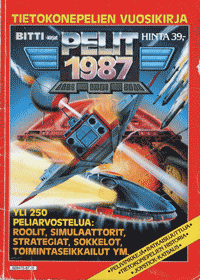 1987
1987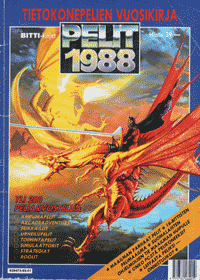 1988
1988 1989 Kevät
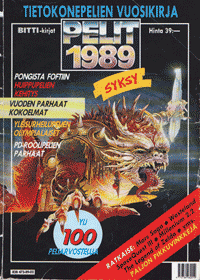 1989 Syksy
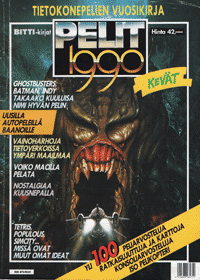 1990 Kevät
 1990 Syksy
 1991 Kevät
 1991 Syksy
Magic Fly
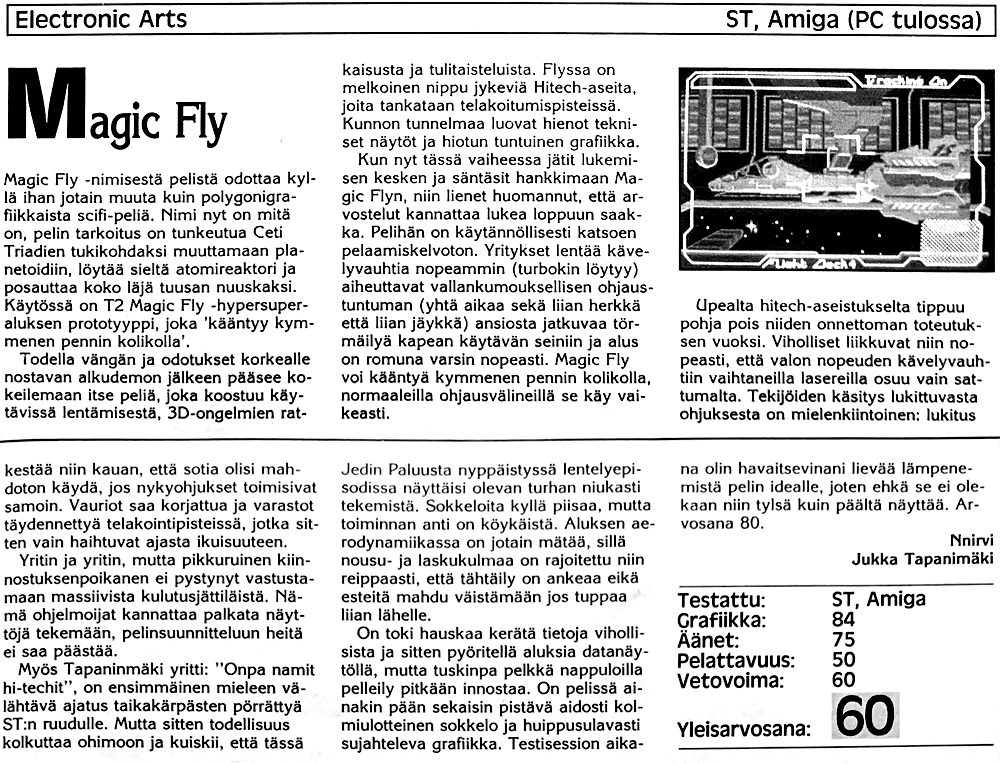
Magic Fly1991 KevätPysyvä linkkiMagic Fly -nimisestä pelistä odottaa kyllä ihan jotain muuta kuin polygonigrafiikkaista scifi-peliä. Nimi nyt on mitä on, pelin tarkoitus on tunkeutua Ceti Triadien tukikohdaksi muuttamaan planetoidiin, löytää sieltä atomireaktori ja posauttaa koko läjä tuusan nuuskaksi. Käytössä on T2 Magic Fly -hypersuperaluksen prototyyppi, joka 'kääntyy kymmenen pennin kolikolla'.
Todella vängän ja odotukset korkealle nostavan alkudemon jälkeen pääsee kokeilemaan itse peliä, joka koostuu käytävissä lentämisestä, 3D-ongelmien ratkaisusta ja tulitaisteluista. Flyssa on melkoinen nippu jykeviä Hitech-aseita, joita tankataan telakoitumispisteissä. Kunnon tunnelmaa luovat hienot tekniset näytöt ja hiotun tuntuinen grafiikka.
Kun nyt tässä vaiheessa jätit lukemisen kesken ja säntäsit hankkimaan Magic Flyn, niin lienet huomannut, että arvostelut kannattaa lukea loppuun saakka. Pelihän on käytännöllisesti katsoen pelaamiskelvoton. Yritykset lentää kävelyvauhtia nopeammin (turbokin löytyy) aiheuttavat vallankumouksellisen ohjaustuntuman (yhtä aikaa sekä liian herkkä että liian jäykkä) ansiosta jatkuvaa törmäilyä kapean käytävän seiniin ja alus on romuna varsin nopeasti. Magic Fly voi kääntyä kymmenen pennin kolikolla, normaaleilla ohjausvälineillä se käy vaikeasti.
Upealta hitech-aseistukselta tippuu pohja pois niiden onnettoman toteutuksen vuoksi. Viholliset liikkuvat niin nopeasti, että valon nopeuden kävelyvauhtiin vaihtaneilla lasereilla osuu vain sattumalta. Tekijöiden käsitys lukittuvasta ohjuksesta on mielenkiintoinen: lukitus kestää niin kauan, että sotia olisi mahdoton käydä, jos nykyohjukset toimisivat samoin. Vauriot saa korjattua ja varastot täydennettyä telakointipisteissä, jotka sitten vain haihtuvat ajasta ikuisuuteen.
Yritin ja yritin, mutta pikkuruinen kiinnostuksenpoikanen ei pystynyt vastustamaan massiivista kulutusjättiläistä. Nämä ohjelmoijat kannattaa palkata näyttöjä tekemään, pelinsuunnitteluun heitä ei saa päästää.
Myös Tapaninmäki yritti: "Onpa namit hi-techit", on ensimmäinen mieleen välähtävä ajatus taikakärpästen pörrättyä ST:n ruudulle. Mutta sitten todellisuus kolkuttaa ohimoon ja kuiskii, että tässä Jedin Paluusta nyppäistyssä lentelyepisodissa näyttäisi olevan turhan niukasti tekemistä. Sokkeloita kyllä piisaa, mutta toiminnan anti on köykäistä. Aluksen aerodynamiikassa on jotain mätää, sillä nousu- ja laskukulmaa on rajoitettu niin reippaasti, että tähtäily on ankeaa eikä esteitä mahdu väistämään jos tuppaa liian lähelle.
On toki hauskaa kerätä tietoja vihollisista ja sitten pyöritellä aluksia datanäytöllä, mutta tuskinpa pelkkä nappuloilla pelleily pitkään innostaa. On pelissä ainakin pään sekaisin pistävä aidosti kolmiulotteinen sokkelo ja huippusulavasti sujahteleva grafiikka. Testisession aikana olin havaitsevinani lievää lämpenemistä pelin idealle, joten ehkä se ei olekaan niin tylsä kuin päältä näyttää. Arvosana 80.
Magic Fly1991 KevätPermalinkFrom a game called Magic Fly you'd certainly expect something quite different from a polygon-graphics sci-fi game. The name is what it is; the aim of the game is to break into a planetoid that the Ceti Triads have turned into a base, find the atomic reactor there and blow the whole heap to smithereens. At your disposal is the prototype of the T2 Magic Fly hyper-super-ship, which 'turns on a ten-pence piece'.
After a really wicked intro demo that raises your expectations sky-high, you get to try out the game itself, which consists of flying along corridors, solving 3D problems and firefights. The Fly packs quite a bundle of hefty hi-tech weapons, which are topped up at docking points. A proper atmosphere is created by fine technical displays and polished-feeling graphics.
Now, if at this point you broke off reading and rushed out to get hold of Magic Fly, you've probably noticed that reviews are worth reading right to the end. The game is, for all practical purposes, unplayable. Attempts to fly faster than walking pace (there's even a turbo) lead, thanks to the revolutionary control feel (both too sensitive and too stiff at the same time), to constant bumping into the walls of the narrow corridor, and the ship is scrap pretty quickly. The Magic Fly may be able to turn on a ten-pence piece, but with normal controls it's hard going.
The superb hi-tech armament has the bottom knocked out of it by its hapless implementation. The enemies move so fast that the lasers, having swapped the speed of light for walking pace, only hit by chance. The makers' notion of a lock-on missile is an interesting one: the lock-on takes so long that waging war would be impossible if today's missiles worked the same way. Damage can be repaired and supplies replenished at docking points, which then simply evaporate from time into eternity.
I tried and tried, but my teeny-tiny fledgling of interest couldn't hold out against the massive giant of attrition. These programmers are well worth hiring to make displays, but they must not be let anywhere near game design.
Tapaninmäki tried too: "Ooh, what yummy hi-techs," is the first thought to flash into your mind once the magic flies have buzzed onto the ST's screen. But then reality knocks at your temple and whispers that this flying-about episode, plucked from Return of the Jedi, seems to have rather too little to do in it. There are mazes aplenty, but the action on offer is flimsy. There's something rotten in the ship's aerodynamics, because the climb and dive angles have been restricted so drastically that aiming is dismal and there's no room to dodge obstacles if you get too close.
Sure, it's fun to gather information on the enemies and then spin the ships around on the data screen, but mere fiddling with buttons is hardly going to excite for long. At least the game does have a head-spinning, genuinely three-dimensional maze and super-smoothly gliding graphics. During the test session I thought I detected a slight warming to the game's idea, so maybe it isn't as dull as it looks on the surface. Rating 80.