Gold of the Aztecs, The
Pelit was a Finnish-language (bi)annual book series published from 1987 to 1991 containing gaming-related articles, tips and most importantly game reviews. Here you can find all the reviews from the books. The reviews were originally written in Finnish; the English versions are translations of the Finnish originals. Maininta tekijänoikeuksista
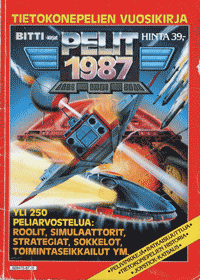 1987
1987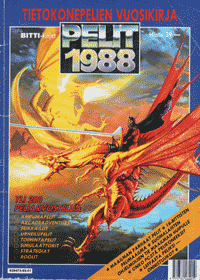 1988
1988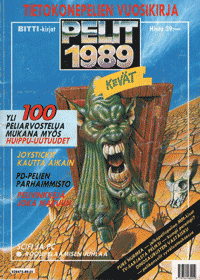 1989 Kevät
 1989 Syksy
 1990 Kevät
 1990 Syksy
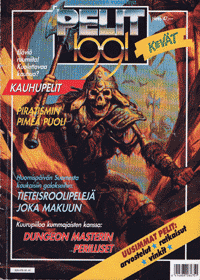 1991 Kevät
 1991 Syksy
Gold of the Aztecs, The
Gold of the Aztecs, The1991 KevätPysyvä linkkiOhjekirjasesta päätellen pelin tekijöihin on iskenyt pahanlaatuinen tilastohulluus. Pari ensimmäistä sivua on pyhitetty teknisiin taustatietoihin, kuten että ohjelmointiin on tarvittu seitsemän Macintoshia, seitsemän ST:tä ja kuusi Amigaa, pelissä on 18 megaa grafiikkaa, 7000 framea animaatiota, 18 000 grafiikkapalaa, tuotekehittely on vaatinut yli kolme miestyövuotta jne jne.
Tuommoisen ryöpytyksen jälkeen alkaa odottaa tajunnan räjäyttävää elämystä, mutta ei vaivannäkö erityisemmin lopputulokseen suodatu. Kyseessä on tuiki tavallinen mätkimisräiskimispeli, jossa pitkätukkaisen huumeenkäyttäjän näköinen painos Indiana Jonesista jahtaa atsteekkien aarretta.
Pieni tarkennus edelliseen: kyllä peli sittenkin räjäyttää tajunnan. Sillä seurauksella, että valkotakkisten miesten on raahattava pelaaja pakkopaidassa pois koneen äärestä tämän huutaessa kostoa sadistisille ohjelmoijille. Syyttävä sormi suunnattakoon pelin ohjaussysteemin keksijään.
Ensimmäinen päivä sujuu nimittäin rattoisasti aseenkäytön opiskelussa. Tulitusnäppäimellä sankari joko vetäisee aseen kotelostaan tai laittaa sen takaisin, mutta tietysti silloin kun tarvitaan asetta, tyyppi lähteekin kävelemään, ja kun pitäisi loikata pikaisesti karkuun se alkaakin sohia pyssyllä.
Toinen päivä sitten opetellaan omituisesti koikkelehtivan miekkosen ohjailua. Vaarallisesta ympäristöstä piittaamatta se ottaa rentoja hehtaariaskelia, kääntyminen kestää ikuisuuksia ja tärkeät hyppyvoltit se tekee kun muistaa tai jos sattuu sille päälle.
Systeemin toki oppii, varsinkin jos käyttää kolmannen päivän näppäinohjauksen harjoitteluun, mutta pelistä nauttiminen jää taustalle, kun jokaista liikettä on mietittävä erikseen.
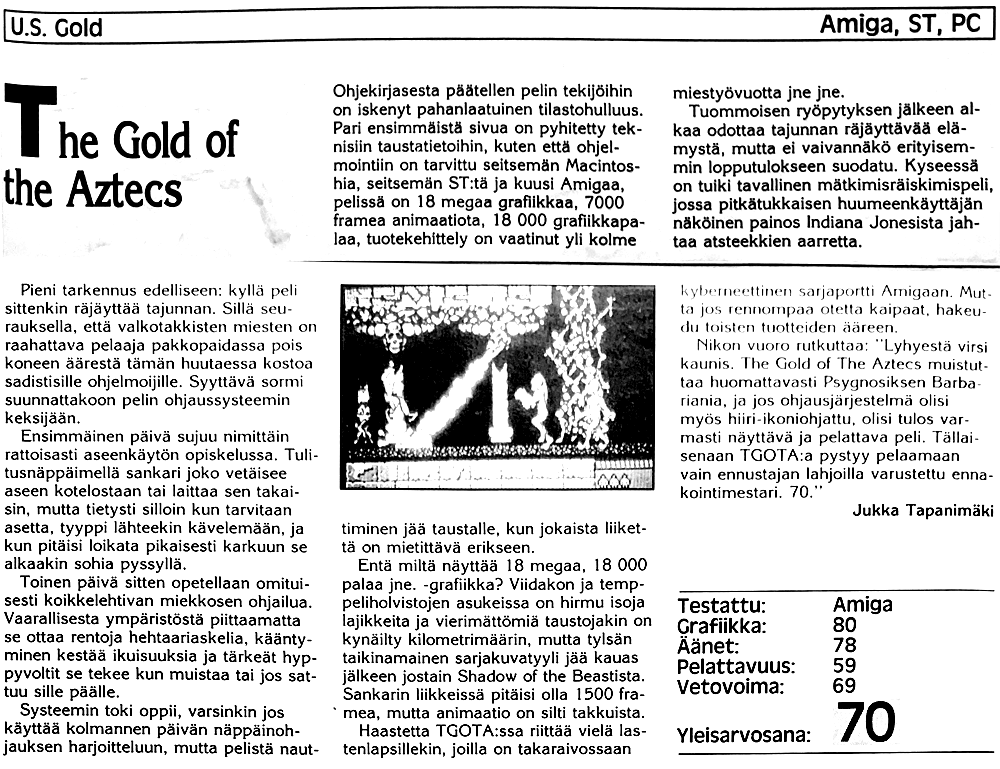
Entä miltä näyttää 18 megaa, 18 000 palaa jne. -grafiikka? Viidakon ja temppeliholvistojen asukeissa on hirmu isoja lajikkeita ja vierimättömiä taustojakin on kynäilty kilometrimäärin, mutta tylsän taikinamainen sarjakuvatyyli jää kauas jälkeen jostain Shadow of the Beastista. Sankarin liikkeissä pitäisi olla 1500 framea, mutta animaatio on silti takkuista.
Haastetta TGOTA:ssa riittää vielä lastenlapsillekin, joilla on takaraivossaan kyberneettinen sarjaportti Amigaan. Mutta jos rennompaa otetta kaipaat, hakeudu toisten tuotteiden ääreen.
Nikon vuoro rutkuttaa: "Lyhyestä virsi kaunis. The Gold of The Aztecs muistuttaa huomattavasti Psygnosiksen Barbariania, ja jos ohjausjärjestelmä olisi myös hiiri-ikoniohjattu, olisi tulos varmasti näyttävä ja pelattava peli. Tällaisenaan TGOTA:a pystyy pelaamaan vain ennustajan lahjoilla varustettu ennakointimestari. 70."
Gold of the Aztecs, The1991 KevätPermalinkJudging by the manual, the game's makers have been struck down by a malignant case of statistics mania. The first couple of pages are devoted to technical background, such as that the programming took seven Macintoshes, seven STs and six Amigas, that the game has 18 megs of graphics, 7000 frames of animation, 18,000 graphics tiles, that development required more than three man-years, etc etc.
After a barrage like that you start expecting a mind-blowing experience, but all the effort doesn't particularly filter through to the end result. What we have is a thoroughly ordinary bash-'em-and-blast-'em game, in which a long-haired-junkie edition of Indiana Jones chases after the Aztecs' treasure.
A small clarification to the above: the game does blow your mind after all. With the result that the men in white coats have to drag the player away from the computer in a straitjacket, screaming for revenge on the sadistic programmers. Let the accusing finger be pointed at whoever invented the game's control system.
You see, the first day passes pleasantly in learning how to use the gun. With the fire button the hero either whips the gun out of its holster or puts it back, but of course when you need the gun, the guy sets off walking instead, and when he ought to leap out of harm's way pronto he starts jabbing about with his pistol.
The second day is then spent learning to steer the strangely lurching fellow. Heedless of the dangerous surroundings he takes relaxed, hectare-sized strides, turning takes forever, and the all-important somersault jumps he does when he remembers to, or if he happens to be in the mood.
You do learn the system, of course, especially if you spend the third day practising the keyboard controls, but enjoying the game takes a back seat when every single move has to be thought out separately.
And what do 18-megs-18,000-tiles-etc. graphics look like? Among the inhabitants of the jungle and the temple vaults there are some terribly big species, and non-scrolling backgrounds have been penned by the kilometre, but the dull, doughy cartoon style lags far behind the likes of Shadow of the Beast. The hero's movements are supposed to have 1500 frames, but the animation is still jerky.
TGOTA has challenge enough left over even for the grandchildren, who will have a cybernetic serial port to the Amiga in the back of their skulls. But if it's a more relaxed style of play you're after, take yourself off to other products.
Niko's turn to grouse: "Short and sweet. The Gold of The Aztecs closely resembles Psygnosis's Barbarian, and if the control system were mouse-and-icon driven as well, the result would surely be a spectacular and playable game. As it stands, TGOTA can only be played by a master of anticipation blessed with a fortune-teller's gifts. 70."