Bomber
Pelit was a Finnish-language (bi)annual book series published from 1987 to 1991 containing gaming-related articles, tips and most importantly game reviews. Here you can find all the reviews from the books. The reviews were originally written in Finnish; the English versions are translations of the Finnish originals. Maininta tekijänoikeuksista
 1987
1987 1988
1988 1989 Kevät
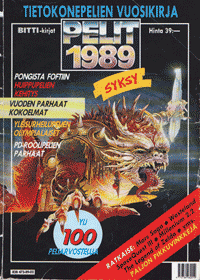 1989 Syksy
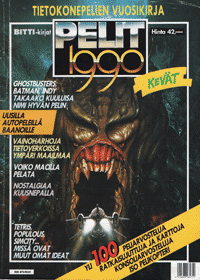 1990 Kevät
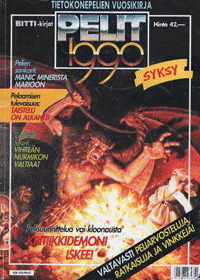 1990 Syksy
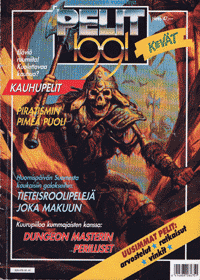 1991 Kevät
 1991 Syksy
Bomber

Bomber1990 KevätPysyvä linkkiBomberin kantavana ideana on mahdollisuus kokeilla pommituslentoja useilla konemalleilla. Kuusnepan valikoimassa on kolme tavanomaisesta poikkeavaa vaihtoehtoa: Mig 29 Fulcrum, F14 Tomcat ja F5E Tiger II, jotka alussa esitellään upeasti piirretyissä kuvissa. Tällä kertaa F15, F16 ynnä muut tutummat äffät jätetään varikolle.
Koneiden aseistuksena ovat tavanomaiset Sidewinderit ja vapaasti valittava yhdistelmä maamaaleihin sopivia Maverick-ohjuksia ja pommeja. Myöhemmissä tehtävissä on mahdollisesti tarjolla muitakin aseita. Pommituslentoja ei voi vapaasti valita, mikä lisää pelin ikää tai sitten ei, sillä vaarana on ennenaikainen pitkästyminen.
Aluksi vaihtoehdot rajoittuvat vapaaseen lentelyyn ja terroristien päämajan pommitukseen eikä tässä vaiheessa lentävistä vihollisista näy vielä jälkeäkään. Jos pystyy selvittämään kaikki tehtävät, niitä voi suunnitella lisää. Mielenkiinnon säilymisen takaa mahdollisuus vaihdella tehtävädiskettejä kavereiden kanssa.
Teknisellä puolella Bomber käy läpi simujen pakolliset kuviot. Koneen lentoa voi seurata lennonjohtotornista, satelliitista tai vapaasti valittavasta pisteestä, jonka etäisyyttä voi zoomailla. Erikoisuutena on mahdollisuus tutustua putoavan pommin näkövinkkeliin. Harvemmin nähtyjä yksityiskohtia ovat myös pitkillä lennoilla tarvittavat välitankkaukset sekä tehtävän jälkeen näytettävä taktinen kartta, josta näkee lentämänsä reitin.
Teknisistä saavutuksista voi mainita sen verran, että pelissä on kaarevia vektoreita esim. lentokoneiden moottoreissa ja renkaissa.
C-64
Täytettyä vektorigrafiikkaa käyttävän lentosimulaattorin kääntäminen kuusneloseen on vähän kuin kaupittelisi mersuja Romaniassa, eli optimismia tekijöillä ainakin piisaa. Sitä paitsi taistelu markkinaosuuksista on kiihtymässä, sillä maailma on jo väärällään toinen toistaan ihmeellisempiä simuja.
Maisema on aika piirteetön ja grafiikan päivitystaajuus on sellaista sekunnin luokkaa, mutta ainakin koneen ohjaustuntuma on siedettävän rajoilla. Huolettomassa lentelyssä kuusnelosen hitaus ei häiritse, mutta kohteeseen osuminen onkin kokonaan toinen juttu. Kokeneellakin pilotilla on edessään piinallisia hetkiä, kun kone tuntuu matelevan, ohjausliikkeet ovat liian karkeita ja kohteen etäisyys jää arvailujen varaan.
Bomberin kääntäminen kuusneloseen tuntuu jotenkin ylimitoitetulta urakalta, mutta tulihan tehtyä ja pitäkää hyvänänne. Mutta yksi seikka jäi kaivelemaan: kun pelin nimi on kerran Bomber, niin miksi siihen ei ole tajuttu laittaa paria mehevää pommituslentoa ydinaselastissa?
Amiga
Graafisesti peli on tosi hieno, upeampia mittaristoja en ole koskaan nähnyt. Lisäksi pelin kaikki objektit on piirretty todella monella polygonilla, ennätys on jossain 130 paikkeilla. äänet ovat tietysti normaalia suihkumoottoreiden suhinaa, mutta alkumusiikki on digitoitua kitaran rämpytystä, joka kestää kiitettävän pitkään, vaikka liitoskohdat huomaakin.
Ulkokuori on siis aivan kunnossa. Sitten onkin aika puhua hieman miinuspuolista. Suurin miinus löytyy pelattavuuden saralta. Kiitos monimutkaisten maisemien ja ennätyksellisten tarkkojen lentokoneiden, on ruudunpäivitys todella hidasta. Tarkoitan siis TODELLA hidasta. Eniten harmittaa se, miten toiminta hidastuu hidastumistaan, kun ruudulla alkaa olla hiemankin enemmän tavaraa.
Hitaudesta huolimatta Bomber on oiva esimerkki siitä, mihin ollaan menossa. Tehtäväeditori on vain alkua, en usko että menee kauan, kun pelaaja saa suunnitella oman koneensa ja testata sitä toisella puolella maailmaa asuvan ihmisen suunnittelemissa tehtävissä. Simulaattorifanien tulevaisuus näyttää ruusuisalta.
PC
Koneesta riippuen PC:n Fighter Bomber joko pesee Amigan version kevyesti tai sitten ei. Jos pöydälläsi muhii 20-25 Mhz 386-prosessorilla varustettu tehohirmu, on FB lähes pakko-ostos. Hitaammissa koneissa maiseman ja koneiden yksityiskohtaisuudesta voi installoinnin yhteydessä tinkiä, jolloin pelin nopeus ei kärsi kauheasti.
Englantilaisten ohjelmatalojen tyyliin kuuluu valitettavasti se, ettei mahdollisia äänikortteja oteta huomioon. Niinpä äänet ovat sitä samaa ilkeää vinkunaa ja piipitystä, jota PC:n omistajat joutuvat sietämään päivästä toiseen.
Kiitos huomattavan nopean ruudunpäivityksen, on PC:n FB:ia suorastaan ilo pelata. Muutenkin PC:n versio tuntuu yleensä ottaen paremmin toteutetulta ja mukavammalta käyttää kuin muut versiot.
Bomber1990 KevätPermalinkBomber's central idea is the chance to try out bombing runs in several different aircraft. The C-64 line-up has three out-of-the-ordinary choices: the Mig 29 Fulcrum, the F14 Tomcat and the F5E Tiger II, which are introduced at the start in superbly drawn pictures. This time the F15, the F16 and the other more familiar F's are left back at the depot.
The planes are armed with the usual Sidewinders plus a freely chosen mix of Maverick missiles and bombs suited to ground targets. Later missions may offer other weapons too. You can't choose your bombing missions freely, which either lengthens the game's life or doesn't, since there's a risk of premature boredom.
To begin with, your options are limited to free flight and bombing the terrorists' headquarters, and at this stage there's not yet a trace of any airborne enemies. If you manage to complete all the missions, you can design more of them. Interest is kept alive by the chance to swap mission disks with your mates.
On the technical side, Bomber goes through the compulsory figures of the sim. You can follow the plane's flight from the control tower, from a satellite or from a freely chosen point whose distance you can zoom in and out. A special feature is the chance to get acquainted with the view from a falling bomb. Other less often seen details are the refuelling stops needed on long flights and the tactical map shown after a mission, which lets you see the route you flew.
As for technical achievements, it's worth mentioning that the game has curved vectors, e.g. in the planes' engines and wheels.
C-64
Converting a flight simulator with filled vector graphics to the C-64 is a bit like hawking Mercs in Romania, so the makers at least aren't short of optimism. Besides, the battle for market share is heating up, since the world is already crammed full of sims, each more amazing than the last.
The landscape is pretty featureless and the graphics update rate is somewhere in the one-second ballpark, but at least the feel of the controls is within tolerable limits. For carefree flying about, the C-64's slowness doesn't bother you, but hitting a target is a whole other matter. Even an experienced pilot faces agonising moments when the plane seems to crawl, the control inputs are too coarse, and the distance to the target is left to guesswork.
Converting Bomber to the C-64 somehow feels like an oversized undertaking, but well, it got done, and you're welcome to it. But one thing kept nagging at me: seeing as the game is called Bomber, why didn't anyone think to put in a couple of juicy bombing runs with a nuclear payload?
Amiga
Graphically the game is really fine; I've never seen more gorgeous instrument panels. On top of that, all the objects in the game are drawn with a great many polygons, the record being somewhere around 130. The sound is naturally the usual whoosh of jet engines, but the title music is digitised guitar strumming that lasts commendably long, even if you can hear the joins.
So the outer shell is in perfect order. Now it's time to talk a little about the downsides. The biggest minus is to be found in the playability department. Thanks to the complex landscapes and record-breakingly detailed aircraft, the screen update is really slow. I mean REALLY slow. What annoys me most is how the action gets slower and slower the moment there's even a little more stuff on the screen.
Despite the slowness, Bomber is a fine example of where things are heading. The mission editor is only the beginning; I don't think it'll be long before the player gets to design their own plane and test it in missions designed by someone living on the other side of the world. The future looks rosy for simulator fans.
PC
Depending on the machine, the PC's Fighter Bomber either wipes the floor with the Amiga version or it doesn't. If you've got a powerhouse with a 20-25 MHz 386 processor humming away on your desk, FB is practically a must-buy. On slower machines you can skimp on the detail of the landscape and aircraft when installing, so the game's speed doesn't suffer too terribly.
Unfortunately it's typical of English software houses not to take any sound cards you might have into account. So the sound is the same nasty whining and beeping that PC owners have to put up with day in, day out.
Thanks to the considerably faster screen update, the PC's FB is a downright joy to play. In other respects too, the PC version generally feels better done and nicer to use than the other versions.