Tracker
Pelit was a Finnish-language (bi)annual book series published from 1987 to 1991 containing gaming-related articles, tips and most importantly game reviews. Here you can find all the reviews from the books. The reviews were originally written in Finnish; the English versions are translations of the Finnish originals. Maininta tekijänoikeuksista
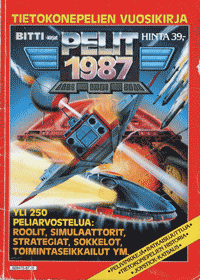 1987
1987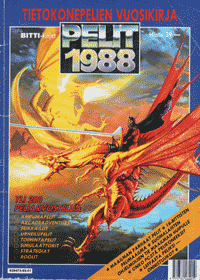 1988
1988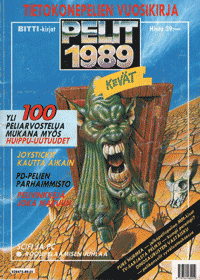 1989 Kevät
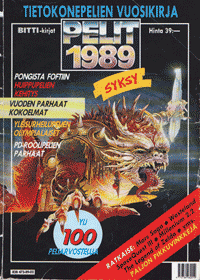 1989 Syksy
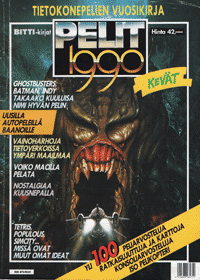 1990 Kevät
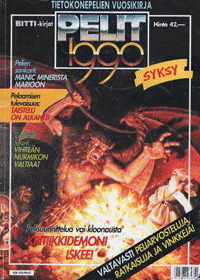 1990 Syksy
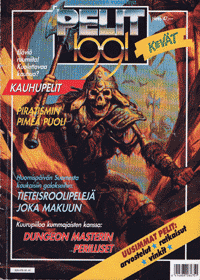 1991 Kevät
 1991 Syksy
Tracker
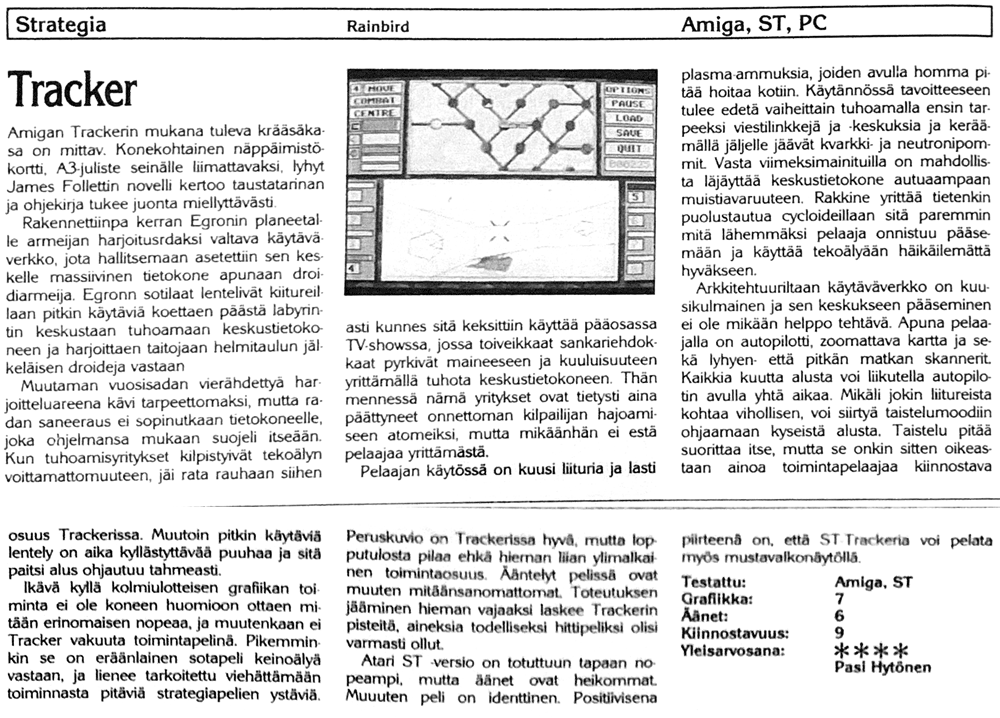
Tracker1989 KevätPysyvä linkkiAmigan Trackerin mukana tuleva krääsäkasa on mittav. Konekohtainen näppäimistökortti, A3-juliste seinälle liimattavaksi, lyhyt James Follettin novelli kertoo taustatarinan ja ohjekirja tukee juonta miellyttävästi.
Rakennettiinpa kerran Egronin planeetalle armeijan harjoitusrdaksi valtava käytäväverkko, jota hallitsemaan asetettiin sen keskelle massiivinen tietokone apunaan droidiarmeija. Egronn sotilaat lentelivät kiitureillaan pitkin käytäviä koettaen päästä labyrintin keskustaan tuhoamaan keskustietokoneen ja harjoittaen taitojaan helmitaulun jälkeläisen droideja vastaan
Muutaman vuosisadan vierähdettyä harjoitteluareena kävi tarpeettomaksi, mutta radan saneeraus ei sopinutkaan tietokoneelle, joka ohjelmansa mukaan suojeli itseään. Kun tuhoamisyritykset kilpistyivät tekoälyn voittamattomuuteen, jäi rata rauhaan siihen asti kunnes sitä keksittiin käyttää pääosassa TV-showssa, jossa toiveikkaat sankariehdokkaat pyrkivät maineeseen ja kuuluisuuteen yrittämällä tuhota keskustietokoneen. Thän mennessä nämä yritykset ovat tietysti aina päättyneet onnettoman kilpailijan hajoamiseen atomeiksi, mutta mikäänhän ei estä pelaajaa yrittämästä.
Pelaajan käytössä on kuusi liituria ja lasti plasma-ammuksia, joiden avulla homma pitää hoitaa kotiin. Käytännössä tavoitteeseen tulee edetä vaiheittain tuhoamalla ensin tarpeeksi viestilinkkejä ja -keskuksia ja keräämällä jäljelle jäävät kvarkki- ja neutronipommit. Vasta viimeksimainituilla on mahdollista läjäyttää keskustietokone autuaampaan muistiavaruuteen. Rakkine yrittää tietenkin puolustautua cycloideillaan sitä paremmin mitä lähemmäksi pelaaja onnistuu pääsemään ja käyttää tekoälyään häikäilemättä hyväkseen.
Arkkitehtuuriltaan käytäväverkko on kuusikulmainen ja sen keskukseen pääseminen ei ole mikään helppo tehtävä. Apuna pelaajalla on autopilotti, zoomattava kartta ja sekä lyhyen- että pitkän matkan skannerit. Kaikkia kuutta alusta voi liikutella autopilotin avulla yhtä aikaa. Mikäli jokin liitureista kohtaa vihollisen, voi siirtyä taistelumoodiin ohjaamaan kyseistä alusta. Taistelu pitää suorittaa itse, mutta se onkin sitten oikeastaan ainoa toimintapelaajaa kiinnostava osuus Trackerissa. Muutoin pitkin käytäviä lentely on aika kyllästyttävää puuhaa ja sitä paitsi alus ohjautuu tahmeasti.
Ikävä kyllä kolmiulotteisen grafiikan toiminta ei ole koneen huomioon ottaen mitään erinomaisen nopeaa, ja muutenkaan ei Tracker vakuuta toimintapelinä. Pikemminkin se on eräänlainen sotapeli keinoälyä vastaan, ja lienee tarkoitettu viehättämään toiminnasta pitäviä strategiapelien ystäviä.
Peruskuvio on Trackerissa hyvä, mutta lopputulosta pilaa ehkä hieman liian ylimalkainen toimintaosuus. Ääntelyt pelissä ovat muuten mitäänsanomattomat. Toteutuksen jääminen hieman vajaaksi laskee Trackerin pisteitä, aineksia todelliseksi hittipeliksi olisi varmasti ollut.
Atari ST -versio on totuttuun tapaan nopeampi, mutta äänet ovat heikommat. Muuten peli on identtinen. Positiivisena piirteenä on, että ST-Trackeria voi pelata myös mustavalkonäytöllä.
Tracker1989 KevätPermalinkThe heap of swag that comes with Amiga Tracker is a hefty one. A machine-specific keyboard card, an A3 poster to glue on your wall, a short story by James Follett that tells the backstory, and a manual that backs up the plot nicely.
Once upon a time, a vast network of corridors was built on the planet Egron as a training course for the army, and a massive computer was installed at its centre to run it, with an army of droids to help. The soldiers of Egronn flew up and down the corridors in their speeders, trying to reach the centre of the labyrinth to destroy the central computer and honing their skills against the droids of the abacus's descendant.
After a few centuries had rolled by, the training arena became redundant, but having the course redeveloped didn't suit the computer, which, as its program dictated, protected itself. When the attempts to destroy it foundered on the invincibility of the artificial intelligence, the course was left in peace until someone hit on the idea of giving it the starring role in a TV show in which hopeful would-be heroes seek fame and glory by trying to destroy the central computer. So far these attempts have, of course, always ended with the unfortunate contestant being broken down into atoms, but then nothing stops the player from having a go.
The player has six gliders and a load of plasma rounds at their disposal, with which the job has to be brought home. In practice you have to work towards the goal in stages, first destroying enough communication links and centres and collecting the quark and neutron bombs left behind. Only with the latter is it possible to blast the central computer off to a better memory space. The contraption naturally tries to defend itself with its cycloids, all the harder the closer the player manages to get, and makes ruthless use of its artificial intelligence.
Architecturally the corridor network is hexagonal, and reaching its centre is no easy task. To help, the player has an autopilot, a zoomable map and both short- and long-range scanners. All six craft can be moved at the same time using the autopilot. If one of the gliders meets an enemy, you can switch to combat mode to control the craft in question. The fighting you have to do yourself, but then that's really the only part of Tracker that will interest an action player. Otherwise, flying along the corridors is pretty tedious work, and on top of that the craft's steering is sticky.
Unfortunately, considering the machine, the 3D graphics are nothing exceptionally fast, and Tracker doesn't convince as an action game in other respects either. Rather, it is a kind of war game against an artificial intelligence, and is presumably meant to appeal to strategy fans who like a bit of action.
The basic pattern of Tracker is good, but the end result is spoiled by an action section that is perhaps a little too sketchy. The noises in the game are, incidentally, nondescript. Execution that falls slightly short lowers Tracker's score; the ingredients for a real hit were certainly there.
As usual, the Atari ST version is faster, but the sound is weaker. Otherwise the game is identical. On the plus side, ST Tracker can also be played on a monochrome monitor.