Reach for the Stars - Third Edition
Pelit was a Finnish-language (bi)annual book series published from 1987 to 1991 containing gaming-related articles, tips and most importantly game reviews. Here you can find all the reviews from the books. The reviews were originally written in Finnish; the English versions are translations of the Finnish originals. Maininta tekijänoikeuksista
 1987
1987 1988
1988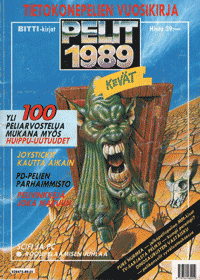 1989 Kevät
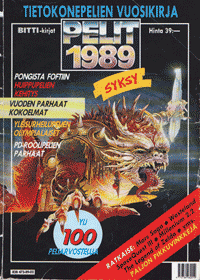 1989 Syksy
 1990 Kevät
 1990 Syksy
 1991 Kevät
 1991 Syksy
Reach for the Stars - Third Edition
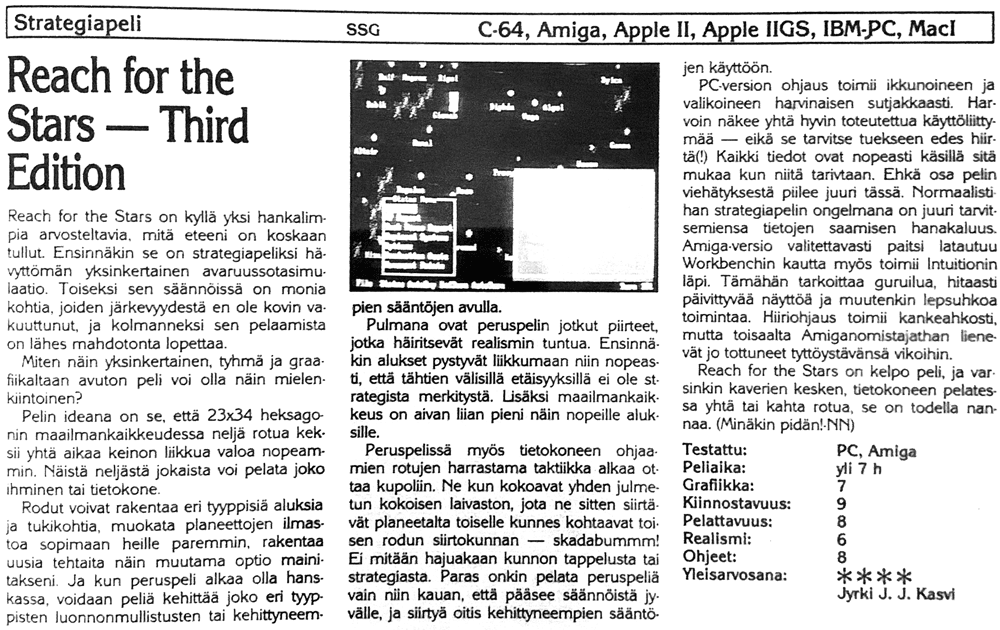
Reach for the Stars - Third Edition1989 KevätPysyvä linkkiReach for the Stars on kyllä yksi hankalimpia arvosteltavia, mitä eteeni on koskaan tullut. Ensinnäkin se on strategiapeliksi hävyttömän yksinkertainen avaruussotasimulaatio. Toiseksi sen säännöissä on monia kohtia, joiden järkevyydestä en ole kovin vakuuttunut, ja kolmanneksi sen pelaamista on lähes mahdotonta lopettaa.
Miten näin yksinkertainen, tyhmä ja graafiikaltaan avuton peli voi olla näin mielenkiintoinen?
Pelin ideana on se, että 23x34 heksagonin maailmankaikkeudessa neljä rotua keksii yhtä aikaa keinon liikkua valoa nopeammin. Näistä neljästä jokaista voi pelata joko ihminen tai tietokone.
Rodut voivat rakentaa eri tyyppisiä aluksia ja tukikohtia, muokata planeettojen ilmastoa sopimaan heille paremmin, rakentaa uusia tehtaita näin muutama optio mainitakseni. Ja kun peruspeli alkaa olla hanskassa, voidaan peliä kehittää joko eri tyyppisten luonnonmullistusten tai kehittyneempien sääntöjen avulla.
Pulmana ovat peruspelin jotkut piirteet, jotka häiritsevät realismin tuntua. Ensinnäkin alukset pystyvät liikkumaan niin nopeasti, että tähtien välisillä etäisyyksillä ei ole strategista merkitystä. Lisäksi maailmankaikkeus on aivan liian pieni näin nopeille aluksille.
Peruspelissä myös tietokoneen ohjaamien rotujen harrastama taktiikka alkaa ottaa kupoliin. Ne kun kokoavat yhden julmetun kokoisen laivaston, jota ne sitten siirtävät planeetalta toiselle kunnes kohtaavat toisen rodun siirtokunnan - skadabummm! Ei mitään hajuakaan kunnon tappelusta tai strategiasta. Paras onkin pelata peruspeliä vain niin kauan, että pääsee säännöistä jyvälle, ja siirtyä oitis kehittyneempien sääntöjen käyttöön.
PC-version ohjaus toimii ikkunoineen ja valikoineen harvinaisen sutjakkaasti. Harvoin näkee yhtä hyvin toteutettua käyttöliittymää - eikä se tarvitse tuekseen edes hiirtä(!) Kaikki tiedot ovat nopeasti käsillä sitä mukaa kun niitä tarivtaan. Ehkä osa pelin viehätyksestä piilee juuri tässä. Normaalistihan strategiapelin ongelmana on juuri tarvitsemiensa tietojen saamisen hanakaluus. Amiga-versio valitettavasti paitsi latautuu Workbenchin kautta myös toimii Intuitionin läpi. Tämähän tarkoittaa guruilua, hitaasti päivittyvää näyttöä ja muutenkin lepsuhkoa toimintaa. Hiiriohjaus toimii kankeahkosti, mutta toisaalta Amiganomistajathan lienevät jo tottuneet tyttöystävänsä vikoihin.
Reach for the Stars on kelpo peli, ja varsinkin kaverien kesken, tietokoneen pelatessa yhtä tai kahta rotua, se on todella nannaa. (Minäkin pidän! -NN)
Reach for the Stars - Third Edition1989 KevätPermalinkReach for the Stars really is one of the trickiest things to review that has ever landed in front of me. Firstly, for a strategy game it's a shamelessly simple space war simulation. Secondly, its rules have many points whose sense I'm not all that convinced of, and thirdly, it's almost impossible to stop playing it.
How can a game this simple, this stupid and this graphically helpless be this interesting?
The idea of the game is that in a universe of 23x34 hexagons, four races simultaneously discover a way to travel faster than light. Each of these four can be played either by a human or by the computer.
The races can build different types of ships and bases, modify planets' climates to suit them better, and build new factories, to mention just a few of the options. And once you've got the basic game under your belt, the game can be developed further with either different kinds of natural disasters or more advanced rules.
The snag is certain features of the basic game that spoil the sense of realism. For one thing, the ships can move so fast that interstellar distances have no strategic significance. On top of that, the universe is far too small for ships this fast.
In the basic game the tactics favoured by the computer-controlled races also start to get on your nerves. You see, they assemble one monstrously huge fleet, which they then shift from planet to planet until they run into another race's colony - skadaboommm! Not the faintest whiff of a proper fight or of strategy. So the best thing is to play the basic game only long enough to get the hang of the rules, and move straight on to the advanced rules.
The PC version's controls, windows and menus and all, work unusually smoothly. You rarely see such a well-implemented user interface - and it doesn't even need a mouse to prop it up(!) All the information is quickly to hand as and when it's needed. Perhaps part of the game's charm lies right here. Normally, after all, the problem with a strategy game is precisely how awkward it is to get at the information you need. Unfortunately the Amiga version not only loads via Workbench but also runs through Intuition. That, of course, means Guru Meditations, a slowly updating screen and generally sluggish operation. The mouse control is on the stiff side, but then again Amiga owners have presumably got used to their girlfriend's faults by now.
Reach for the Stars is a decent game, and especially among friends, with the computer playing one or two races, it's really yummy. (I like it too! -NN)