Deathlord
Pelit was a Finnish-language (bi)annual book series published from 1987 to 1991 containing gaming-related articles, tips and most importantly game reviews. Here you can find all the reviews from the books. The reviews were originally written in Finnish; the English versions are translations of the Finnish originals. Maininta tekijänoikeuksista
 1987
1987 1988
1988 1989 Kevät
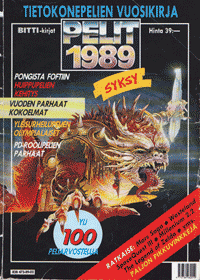 1989 Syksy
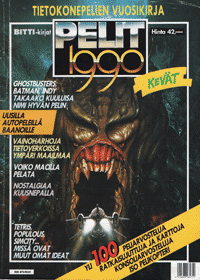 1990 Kevät
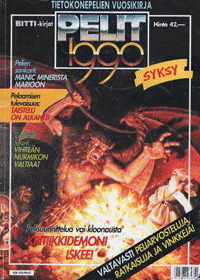 1990 Syksy
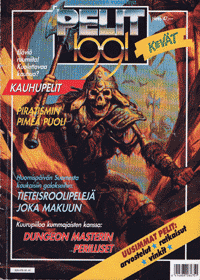 1991 Kevät
 1991 Syksy
Deathlord
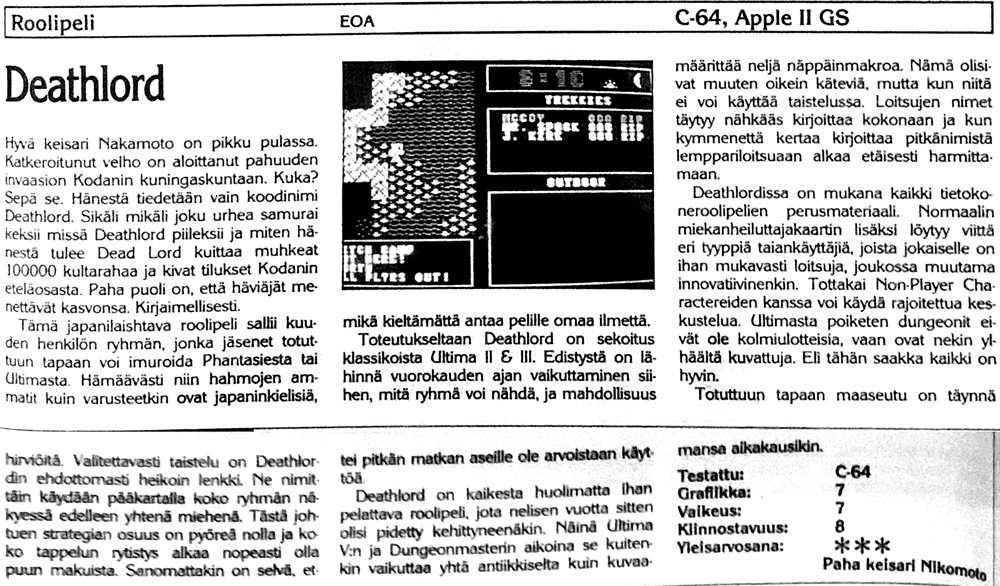
Deathlord1989 KevätPysyvä linkkiHyvä keisari Nakamoto on pikku pulassa. Katkeroitunut velho on aloittanut pahuuden invaasion Kodanin kuningaskuntaan. Kuka? Sepä se. Hänestä tiedetään vain koodinimi Deathlord. Sikäli mikäli joku urhea samurai keksii missä Deathlord piileksii ja miten hänestä tulee Dead Lord kuittaa muhkeat 100000 kultarahaa ja kivat tilukset Kodanin eteläosasta. Paha puoli on, että häviäjät menettävät kasvonsa. Kirjaimellisesti.
Tämä japanilaishtava roolipeli sallii kuuden henkilön ryhmän, jonka jäsenet totuttuun tapaan voi imuroida Phantasiesta tai Ultimasta. Hämäävästi niin hahmojen ammatit kuin varusteetkin ovat japaninkielisiä, mikä kieltämättä antaa pelille omaa ilmettä.
Toteutukseltaan Deathlord on sekoitus klassikoista Ultima II & III. Edistystä on lähinnä vuorokauden ajan vaikuttaminen siihen, mitä ryhmä voi nähdä, ja mahdollisuus määrittää neljä näppäinmakroa. Nämä olisivat muuten oikein käteviä, mutta kun niitä ei voi käyttää taistelussa. Loitsujen nimet täytyy nähkääs kirjoittaa kokonaan ja kun kymmenettä kertaa kirjoittaa pitkänimistä lemppariloitsuaan alkaa etäisesti harmittamaan.
Deathlordissa on mukana kaikki tietokoneroolipelien perusmateriaali. Normaalin miekanheiluttajakaartin lisäksi löytyy viittä eri tyyppiä taiankäyttäjiä, joista jokaiselle on ihan mukavasti loitsuja, joukossa muutama innovatiivinenkin. Tottakai Non-Player Charactereiden kanssa voi käydä rajoitettua keskustelua. Ultimasta poiketen dungeonit eivät ole kolmiulotteisia, vaan ovat nekin ylhäältä kuvattuja. Eli tähän saakka kaikki on hyvin.
Totuttuun tapaan maaseutu on täynnä hirviöitä. Valitettavasti taistelu on Deathlordin ehdottomasti heikoin lenkki. Ne nimittäin käydään pääkartalla koko ryhmän näkyessä edelleen yhtenä miehenä. Tästä johtuen strategian osuus on pyöreä nolla ja koko tappelun rytistys alkaa nopeasti olla puun makuista. Sanomattakin on selvä, ettei pitkän matkan aseille ole arvoistaan käyttöä.
Deathlord on kaikesta huolimatta ihan pelattava roolipeli, jota nelisen vuotta sitten olisi pidetty kehittyneenäkin. Näinä Ultima V:n ja Dungeonmasterin aikoina se kuitenkin vaikuttaa yhtä antiikkiselta kuin kuvaamansa aikakausikin.
Deathlord1989 KevätPermalinkGood Emperor Nakamoto is in a bit of a pickle. An embittered wizard has launched an invasion of evil on the kingdom of Kodan. Who? That's just it. Only a code name is known: Deathlord. If some brave samurai figures out where Deathlord is skulking and how to make a Dead Lord out of Deathlord, the samurai pockets a hefty 100000 gold pieces and a nice estate in southern Kodan. The catch is that the losers lose face. Literally.
This Japanese-flavoured role-playing game allows a party of six, whose members can, as usual, be vacuumed in from Phantasie or Ultima. Confusingly, both the characters' professions and their equipment are in Japanese, which admittedly gives the game a look of its own.
In its execution, Deathlord is a mix of the classics Ultima II & III. The advances are mainly that the time of day affects what the party can see, and the option to define four key macros. These would be really handy otherwise, except that you just can't use them in combat. Spell names, you see, have to be typed out in full, and by the tenth time you type out your long-named favourite spell, it starts to get faintly annoying.
Deathlord includes all the basic ingredients of computer role-playing games. On top of the usual brigade of sword-wavers there are five different types of magic-user, each with a pretty decent set of spells, a few innovative ones among them. Of course you can have limited conversations with Non-Player Characters. Unlike Ultima, the dungeons aren't three-dimensional but are shown from above as well. So up to this point, all is well.
As is customary, the countryside is full of monsters. Unfortunately, combat is by far Deathlord's weakest link. The fights, you see, are fought on the main map with the whole party still shown as one man. As a result, the strategy content is a big round zero, and the whole brawling scrum soon starts to taste like cardboard. It goes without saying that long-range weapons don't get the use they deserve.
Despite everything, Deathlord is a perfectly playable role-playing game, one that four years or so ago would even have been considered advanced. In these days of Ultima V and Dungeonmaster, however, it seems as antique as the era it depicts.