Zarathrusta
Pelit was a Finnish-language (bi)annual book series published from 1987 to 1991 containing gaming-related articles, tips and most importantly game reviews. Here you can find all the reviews from the books. The reviews were originally written in Finnish; the English versions are translations of the Finnish originals. Maininta tekijänoikeuksista
 1987
1987 1988
1988 1989 Kevät
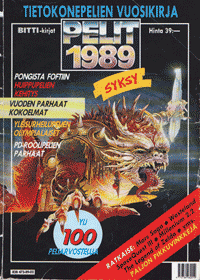 1989 Syksy
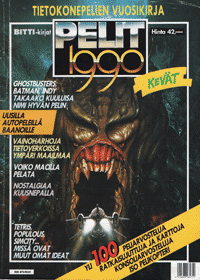 1990 Kevät
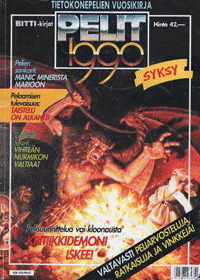 1990 Syksy
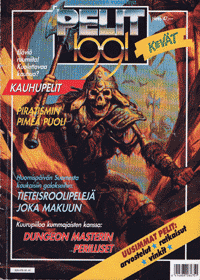 1991 Kevät
 1991 Syksy
Zarathrusta
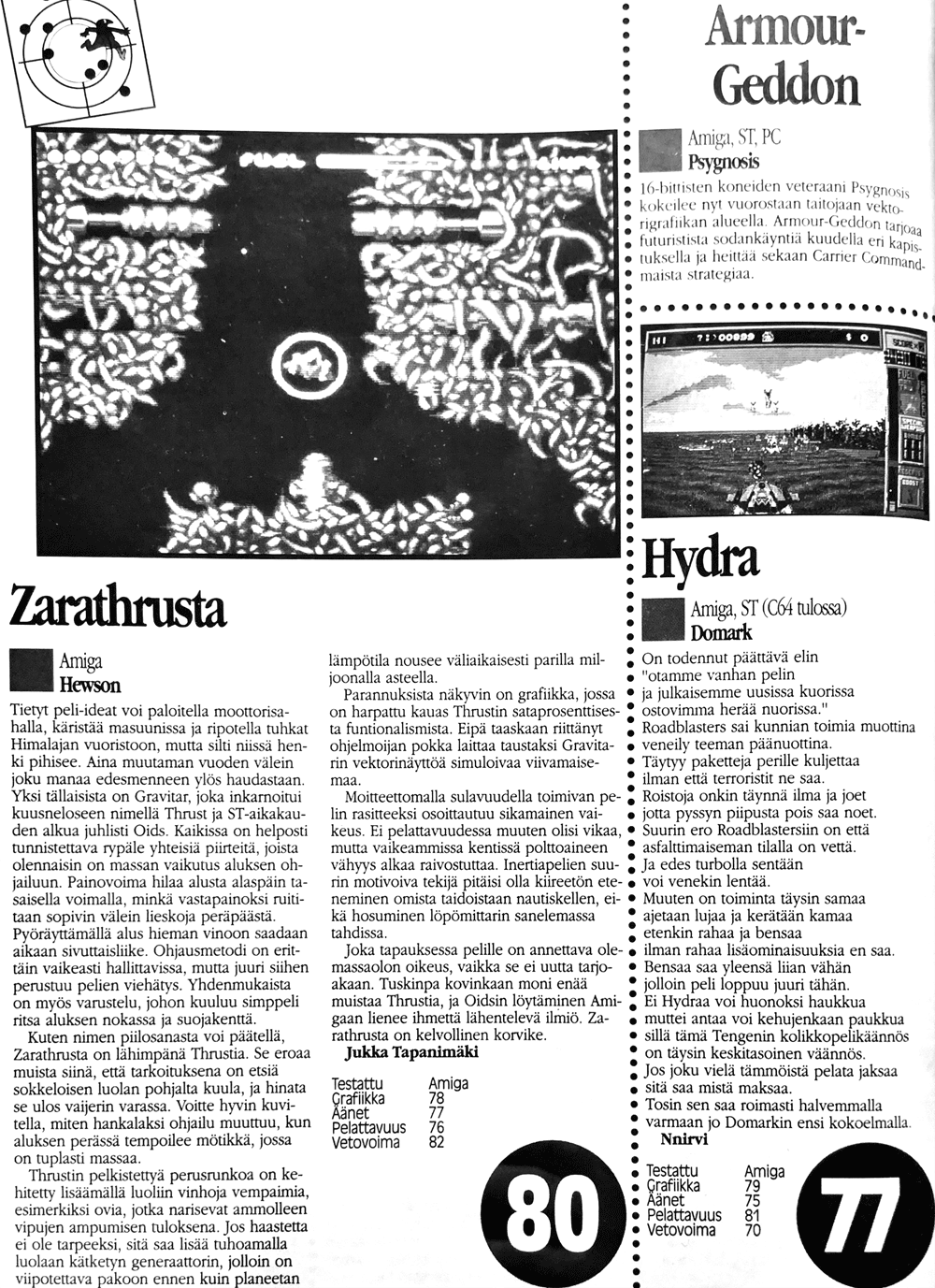
Zarathrusta1991 SyksyPysyvä linkkiTietyt peli-ideat voi paloitella moottorisahalla, käristää masuunissa ja ripotella tuhkat Himalajan vuoristoon, mutta silti niissä henki pihisee. Aina muutaman vuoden välein joku manaa edesmenneen ylös haudastaan. Yksi tällaisista on Gravitar, joka inkarnoitui kuusneloseen nimellä Thrust ja ST-aikakauden alkua juhlisti Oids. Kaikissa on helposti tunnistettava rypäle yhteisiä piirteitä, joista olennaisin on massan vaikutus aluksen ohjailuun. Painovoima hilaa alusta alaspäin tasaisella voimalla, minkä vastapainoksi ruititaan sopivin välein lieskoja peräpäästä. Pyöräyttämällä alus hieman vinoon saadaan aikaan sivuttaisliike. Ohjausmetodi on erittäin vaikeasti hallittavissa, mutta juuri siihen perustuu pelien viehätys. Yhdenmukaista on myös varustelu, johon kuuluu simppeli ritsa aluksen nokassa ja suojakenttä.
Kuten nimen piilosanasta voi päätellä, Zarathrusta on lähimpänä Thrustia. Se eroaa muista siinä, että tarkoituksena on etsiä sokkeloisen luolan pohjalta kuula, ja hinata se ulos vaijerin varassa. Voitte hyvin kuvitella, miten hankalaksi ohjailu muuttuu, kun aluksen perässä tempoilee mötikkä, jossa on tuplasti massaa.
Thrustin pelkistettyä perusrunkoa on kehitetty lisäämällä luoliin vinhoja vempaimia, esimerkiksi ovia, jotka narisevat ammolleen vipujen ampumisen tuloksena. Jos haastetta ei ole tarpeeksi, sitä saa lisää tuhoamalla luolaan kätketyn generaattorin, jolloin on viipotettava pakoon ennen kuin planeetan lämpötila nousee väliaikaisesti parilla miljoonalla asteella.
Parannuksista näkyvin on grafiikka, jossa on harpattu kauas Thrustin sataprosenttisesta funtionalismista. Eipä taaskaan riittänyt ohjelmoijan pokka laittaa taustaksi Gravitarin vektorinäyttöä simuloivaa viivamaisemaa.
Moitteettomalla sulavuudella toimivan pelin rasitteeksi osoittautuu sikamainen vaikeus. Ei pelattavuudessa muuten olisi vikaa, mutta vaikeammissa kentissä polttoaineen vähyys alkaa raivostuttaa. Inertiapelien suurin motivoiva tekijä pitäisi olla kiireetön eteneminen omista taidoistaan nautiskellen, eikä hosuminen löpömittarin sanelemassa tahdissa.
Joka tapauksessa pelille on annettava olemassaolon oikeus, vaikka se ei uutta tarjoakaan. Tuskinpa kovinkaan moni enää muistaa Thrustia, ja Oidsin löytäminen Amigaan lienee ihmettä lähentelevä ilmiö. Zarathrusta on kelvollinen korvike.
Zarathrusta1991 SyksyPermalinkSome game ideas you can hack to pieces with a chainsaw, roast in a blast furnace and scatter the ashes across the Himalayas, and still the breath goes on wheezing in them. Every few years somebody conjures the deceased back up out of its grave. One of these is Gravitar, which was reincarnated on the Commodore 64 as Thrust, while the dawn of the ST era was celebrated with Oids. All of them share an easily recognisable cluster of common features, the most essential of which is the effect of mass on how the ship handles. Gravity hauls the ship downwards with a steady force, which you counter by squirting flames out of the rear end at suitable intervals. Tilting the ship slightly askew gets you sideways movement. The control method is extremely hard to master, but that is exactly what the charm of these games rests on. The kit is uniform too: a simple peashooter in the ship's nose, and a shield.
As you can deduce from the word hidden in the name, Zarathrusta is closest to Thrust. It differs from the others in that the aim is to find a ball at the bottom of a labyrinthine cavern and tow it out on a cable. You can well imagine how awkward the steering gets when a lump with twice the mass is yanking about behind the ship.
Thrust's stripped-down basic framework has been developed by adding nifty gizmos to the caverns, for example doors that creak wide open when you shoot levers. If that isn't challenge enough, you can get more by destroying the generator hidden in the cavern, after which you have to scurry off to safety before the planet's temperature temporarily rises by a couple of million degrees.
The most visible of the improvements is the graphics, which have taken a giant stride away from Thrust's one-hundred-percent functionalism. Once again the programmer didn't have the nerve to use a line-drawn landscape simulating Gravitar's vector display as the backdrop.
The game runs with flawless smoothness, but it turns out to be weighed down by a beastly difficulty. There would otherwise be nothing wrong with the playability, but in the harder levels the shortage of fuel starts to drive you up the wall. The biggest motivating factor in inertia games ought to be unhurried progress, savouring your own skills, not flailing about at a pace dictated by the juice gauge.
In any case, the game has to be granted its right to exist, even if it offers nothing new. Hardly anybody remembers Thrust any more, and finding Oids for the Amiga must be a phenomenon bordering on the miraculous. Zarathrusta is a decent substitute.