SU-25 Stormovik
Pelit was a Finnish-language (bi)annual book series published from 1987 to 1991 containing gaming-related articles, tips and most importantly game reviews. Here you can find all the reviews from the books. The reviews were originally written in Finnish; the English versions are translations of the Finnish originals. Maininta tekijänoikeuksista
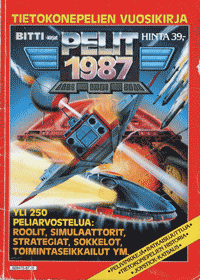 1987
1987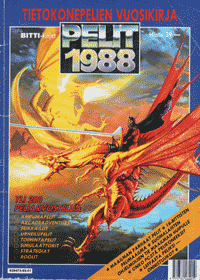 1988
1988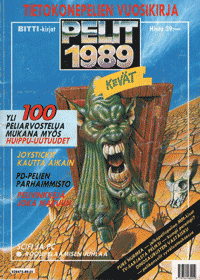 1989 Kevät
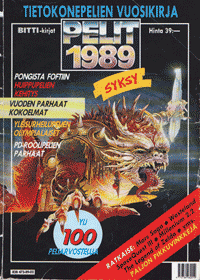 1989 Syksy
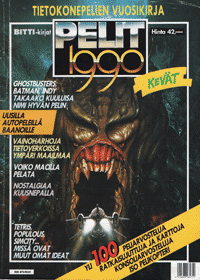 1990 Kevät
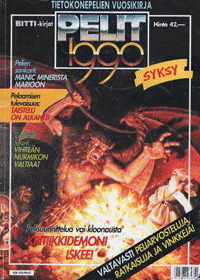 1990 Syksy
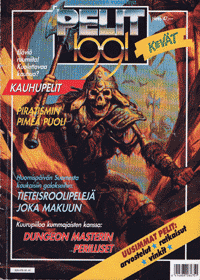 1991 Kevät
 1991 Syksy
SU-25 Stormovik

SU-25 Stormovik1991 KevätPysyvä linkkiKuka muistaa vielä helikopterisimulaattorin nimeltä LHX Attack Chopper? Kyseisen pelin ohjelmoija on lyönyt hynttyyt yhteen hädintuskin 60-luvulta selvinneen pitkätukan kanssa ja tuottanut melkein samoja rutiineja hyödyntävän SU-25 Stormovikin, ensimmäisen neuvostoliittolaista hävittäjää simuloivan lentoemon, siis lentoemun.
Pohjoismaalaiselta kuulostava Brent Iverson on tehnyt sen verran hyvät 3D-rutiinit, että niitä piti Electronic Artsin mielestä käyttää toisessakin pelissä. Kaiken lisäksi trendi oli juuri siirtymässä kohti ei-amerikkalaisia lentokoneita, joten peliä suunnittelemaan hankittiin Rick Tiberi, jonka aikaisempi peliohjelmointikokemus rajoittuu pariin vanhaan C64-peliin ja Electronic Artsin Budokaniin. Suunnittelijaksi hänet valittiin kai sillä perusteella, että hän rakenteli lapsena hullun lailla pienoismalleja erimaalaisista hävittäjäkoneista.
Kyseessä on siis Sukhoi SU-25, erittäin raskaasti aseistettu, tuulennopea maataistelukone, joka ilmaantuu NATOn joukkojen yläpuolelle kuin tyhjästä suuren huippunopeutensa ansiosta. Räväkkä pommi-isku tapahtuu hämmentyneiden sotilaiden katsellessa kohteen vierestä, ja joskus sisältä, ja samantien kone häipyy jo kohti horisonttia vältellen tutkasäteitä.
Näin se oli siis suunniteltu tapahtuvan todellisuudessa. Mutta Electronic Arts jänisti, eikä pelissä tuhotakaan NATOn joukkoja. Ehei, tilalle on väännetty erittäin tekaistun tuntuinen juttu kansainvälisistä terroristeista, jotka ovat jotenkin onnistuneet hankkimaan kalustoa sekä NATOn että Varsovan Liiton maista. Pelillisesti tämä merkitsee sitä, että pelaaja joutuu hävittämään sekä neuvostoliittolaista että amerikkalaista taistelukalustoa. Näin kukaan ei pääse syyttämään Electronic Artsia maanpetturuudesta tai jostain muusta vastaavasta.
Aikaisemmin lentosimulaattoreita pelanneille SU-25 ei oikeastaan tarjoa mitään muuta uutta kuin mahdollisuuden lentää neuvostoliittolaisella koneella ja tiputella F-177 Stealth Fightereitä. Pelin kolmisenkymmentä taistelutehtävää eivät ihmeemmin eroa mistään muusta keskitasoa paremmasta lentosimulaattorista. Mainittavimpia ominaisuuksia ovat 256-värinen aika nopea 3D-vektorigrafiikka, pelin realistisuus ja vaikeus sekä muutama tekninen hienous. Vektorinero Iverson on hieman hionut koodiaan LHX:n jälkeen, minkä kyllä huomaa.
SU-25 on myös erittäin realistinen siinä, että helpoinkin taitotaso on tappavan vaikea. Harjoitusta vaaditaan todella paljon, kunnes tehtäviltä aletaan saapua hengissä ja yhtenä palasena takaisin. Erilaiset näkökulmat ovat jo jonkin aikaa olleet suosittuja lentosimulaattoreissa, eikä SU-25 aio jäädä kenellekään toiseksi: erilaisia kuvakulmia löytyy kevyesti toistakymmentä.
Vielä yksi mainittavan arvoinen hienous on se, että jos lentäjä saa osuman, ilmaantuu kuomuun luodinreikä ja pahimmassa tapauksessa präiskähtää loraus vertakin kuomun sisäpinnalle. Peli ilmoittaa sopivassa vaiheessa, että lentäjä on erittäin vakavasti haavoittunut ja kuolee pian verenhukkaan. Siinä vaiheessa on jo korkea aika kääntää nokka kohti lähintä ystävällistä lentokenttää.
VGA-grafiikka on erittäin hienon näköistä, eikä vaadi edes kovin nopeaa konetta. AdLibin äänet ovat lähes parasta, mihin kortti pystyy, mutta ammattilaisen Roland-korttia ei jostain syystä tueta lainkaan. PC:n omat äänet voi jo tätä nykyä jättää omaan arvoonsa. Pelattavuus on parhaimmillaan joystickillä ja totta puhuen, hiiri- ja näppäinohjaus ovat kammottavan epäpelattavia. Parisenkymmentä toimintanäppäintä eivät pelota veteraanilentäjää, mutta aloittelija voi joutua selaamaan käsikirjaa hyvänkin tovin.
SU-25 Stormovik sijoittuu PC:n lentosimulaattorien rypäleessä sinne aivan kärkipäähän, heti MicroProsen parhaiden simujen perään. Hintansa arvoinen sijoitus.
SU-25 Stormovik1991 KevätPermalinkWho still remembers a helicopter simulator called LHX Attack Chopper? The programmer of that game has shacked up with a long-hair who only barely made it out of the sixties and produced SU-25 Stormovik, which uses almost the same routines: the first flight mother to simulate a Soviet fighter, I mean flight emu.
The Nordic-sounding Brent Iverson made such good 3D routines that Electronic Arts reckoned they had to be used in another game too. On top of that, the trend was just shifting towards non-American aircraft, so Rick Tiberi was brought in to design the game, although his previous game programming experience is limited to a couple of old C64 games and Electronic Arts' Budokan. He was presumably picked as designer on the grounds that as a kid he built scale models of fighter planes from every which country like a madman.
So what we have here is the Sukhoi SU-25, an extremely heavily armed, wind-swift ground attack aircraft that appears above NATO troops as if out of nowhere thanks to its high top speed. The brash bombing strike takes place while bewildered soldiers watch from beside the target, and sometimes from inside it, and straight away the plane is already vanishing towards the horizon, dodging radar beams.
That, then, is how it was designed to happen in reality. But Electronic Arts chickened out, and in the game you don't get to destroy NATO troops after all. Oh no, in their place they've wrung out a very made-up-feeling tale about international terrorists who have somehow managed to get hold of hardware from both NATO and Warsaw Pact countries. In gameplay terms this means the player has to wipe out both Soviet and American combat hardware. That way nobody gets to accuse Electronic Arts of treason or anything of the sort.
For anyone who has played flight simulators before, SU-25 doesn't really offer anything new apart from the chance to fly a Soviet plane and knock F-177 Stealth Fighters out of the sky. The game's thirty-odd combat missions don't differ much from any other better-than-average flight simulator. The features most worth mentioning are the 256-colour, fairly fast 3D vector graphics, the game's realism and difficulty, and a few technical niceties. Vector genius Iverson has polished his code a bit since LHX, and it certainly shows.
SU-25 is also extremely realistic in that even the easiest skill level is murderously difficult. It takes a really huge amount of practice before you start getting back from missions alive and in one piece. Different viewpoints have been popular in flight simulators for a while now, and SU-25 has no intention of coming second to anyone: there are easily more than ten different camera angles.
One more nicety worth mentioning is that if the pilot takes a hit, a bullet hole appears in the canopy, and in the worst case a splash of blood even splatters across the inside of the canopy. At the appropriate moment the game announces that the pilot is very seriously wounded and will soon bleed to death. By that point it's high time to turn the nose towards the nearest friendly airfield.
The VGA graphics look very fine and don't even need a particularly fast machine. The AdLib sound is close to the best the card can manage, but for some reason the professional's Roland card isn't supported at all. These days the PC's own sound can be left well alone. Playability is at its best with a joystick, and to tell the truth, the mouse and keyboard controls are horribly unplayable. Twenty-odd command keys won't scare a veteran pilot, but a beginner may end up leafing through the manual for a good while.
SU-25 Stormovik places itself right up at the very front of the PC's bunch of flight simulators, straight after MicroProse's best sims. An investment worth its price.