Baltic 1985
Pelit was a Finnish-language (bi)annual book series published from 1987 to 1991 containing gaming-related articles, tips and most importantly game reviews. Here you can find all the reviews from the books. The reviews were originally written in Finnish; the English versions are translations of the Finnish originals. Maininta tekijänoikeuksista
 1987
1987 1988
1988 1989 Kevät
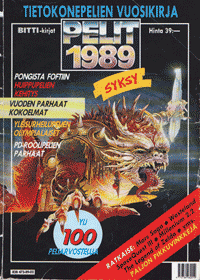 1989 Syksy
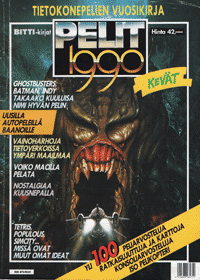 1990 Kevät
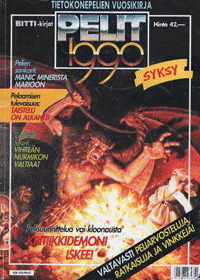 1990 Syksy
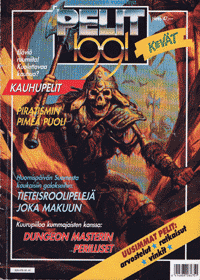 1991 Kevät
 1991 Syksy
Baltic 1985
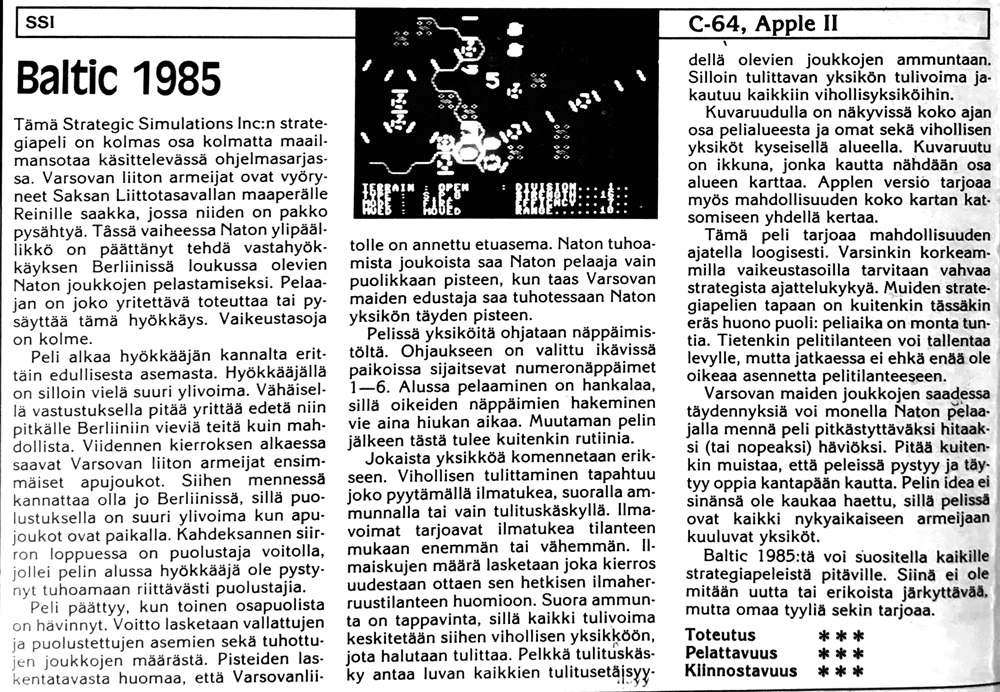
Baltic 19851987Pysyvä linkkiTämä Strategic Simulations Inc:n strategiapeli on kolmas osa kolmatta maailmansotaa käsittelevässä ohjelmasarjassa. Varsovan liiton armeijat ovat vyöryneet Saksan Liittotasavallan maaperälle Reinille saakka, jossa niiden on pakko pysähtyä. Tässä vaiheessa Naton ylipäällikkö on päättänyt tehdä vastahyökkäyksen Berliinissä loukussa olevien Naton joukkojen pelastamiseksi. Pelaajan on joko yritettävä toteuttaa tai pysäyttää tämä hyökkäys. Vaikeustasoja on kolme.
Peli alkaa hyökkääjän kannalta erittäin edullisesta asemasta. Hyökkääjällä on silloin vielä suuri ylivoima. Vähäisellä vastustuksella pitää yrittää edetä niin pitkälle Berliiniin vieviä teitä kuin mahdollista. Viidennen kierroksen alkaessa saavat Varsovan liiton armeijat ensimmäiset apujoukot. Siihen mennessä kannattaa olla jo Berliinissä, sillä puolustuksella on suuri ylivoima kun apujoukot ovat paikalla. Kahdeksannen siirron loppuessa on puolustaja voitolla, jollei pelin alussa hyökkääjä ole pystynyt tuhoamaan riittävästi puolustajia.
Peli päättyy, kun toinen osapuolista on hävinnyt. Voitto lasketaan vallattujen ja puolustettujen asemien sekä tuhottujen joukkojen määrästä. Pisteiden laskentatavasta huomaa, että Varsovanliittolle on annettu etuasema. Naton tuhoamista joukoista saa Naton pelaaja vain puolikkaan pisteen, kun taas Varsovan maiden edustaja saa tuhotessaan Naton yksikön täyden pisteen.
Pelissä yksiköitä ohjataan näppäimistöltä. Ohjaukseen on valittu ikävissä paikoissa sijaitsevat numeronäppäimet 1-6. Alussa pelaaminen on hankalaa, sillä oikeiden näppäimien hakeminen vie aina hiukan aikaa. Muutaman pelin jälkeen tästä tulee kuitenkin rutiinia.
Jokaista yksikköä komennetaan erikseen. Vihollisen tulittaminen tapahtuu joko pyytämällä ilmatukea, suoralla ammunnalla tai vain tulituskäskyllä. Ilmavoimat tarjoavat ilmatukea tilanteen mukaan enemmän tai vähemmän. Ilmaiskujen määrä lasketaan joka kierros uudestaan ottaen sen hetkisen ilmaherruustilanteen huomioon. Suora ammunta on tappavinta, sillä kaikki tulivoima keskitetään siihen vihollisen yksikköön, jota halutaan tulittaa. Pelkkä tulituskäsky antaa luvan kaikkien tulitusetäisyydellä olevien joukkojen ammuntaan. Silloin tulittavan yksikön tulivoima jakautuu kaikkiin vihollisyksiköihin.
Kuvaruudulla on näkyvissä koko ajan osa pelialueesta ja omat sekä vihollisen yksiköt kyseisellä alueella. Kuvaruutu on ikkuna, jonka kautta nähdään osa alueen karttaa. Applen versio tarjoaa myös mahdollisuuden koko kartan katsomiseen yhdellä kertaa.
Tämä peli tarjoaa mahdollisuuden ajatella loogisesti. Varsinkin korkeammilla vaikeustasoilla tarvitaan vahvaa strategista ajattelukykyä. Muiden strategiapelien tapaan on kuitenkin tässäkin eräs huono puoli: peliaika on monta tuntia. Tietenkin pelitilanteen voi tallentaa levylle, mutta jatkaessa ei ehkä enää ole oikeaa asennetta pelitilanteeseen.
Varsovan maiden joukkojen saadessa täydennyksiä voi monella Naton pelaajalla mennä peli pitkästyttäväksi hitaaksi (tai nopeaksi) häviöksi. Pitää kuitenkin muistaa, että peleissä pystyy ja täytyy oppia kantapään kautta. Pelin idea ei sinänsä ole kaukaa haettu, sillä pelissä ovat kaikki nykyaikaiseen armeijaan kuuluvat yksiköt.
Baltic 1985:tä voi suositella kaikille strategiapeleistä pitäville. Siinä ei ole mitään uutta tai erikoista järkyttävää, mutta omaa tyyliä sekin tarjoaa.
Baltic 19851987PermalinkThis strategy game from Strategic Simulations Inc. is the third part of a series of programs about World War III. The Warsaw Pact armies have rolled onto the soil of the Federal Republic of Germany as far as the Rhine, where they are forced to halt. At this point NATO's supreme commander has decided to launch a counter-attack to rescue the NATO troops trapped in Berlin. The player has to either try to carry out this attack or stop it. There are three difficulty levels.
The game starts from a position that is highly favourable to the attacker. At that stage the attacker still has a large superiority in strength. While resistance is light, you have to try to push as far as possible along the roads leading to Berlin. At the start of the fifth turn the Warsaw Pact armies receive their first reinforcements. By then you had better already be in Berlin, because the defence has a large superiority once the reinforcements have arrived. By the end of the eighth move the defender is winning, unless the attacker has managed to destroy enough of the defenders early in the game.
The game ends when one of the sides has lost. Victory is calculated from the number of positions captured and held and the number of troops destroyed. You can tell from the way the points are counted that the Warsaw Pact has been given the upper hand. The NATO player gets only half a point for each unit NATO destroys, whereas whoever represents the Warsaw Pact countries gets a full point for destroying a NATO unit.
In the game the units are controlled from the keyboard. The number keys 1-6, which sit in awkward places, have been chosen for the controls. Playing is fiddly at first, since finding the right keys always takes a moment. After a few games, though, it becomes routine.
Each unit is commanded separately. The enemy is fired on either by calling in air support, by direct fire or just with a general fire order. The air force provides more or less air support depending on the situation. The number of air strikes is recalculated every turn, taking the current state of air superiority into account. Direct fire is the deadliest, because all the firepower is concentrated on the one enemy unit you want to hit. A plain fire order gives all the troops within range permission to open fire. The firing unit's firepower is then split among all the enemy units.
The screen always shows part of the playing area, along with your own and the enemy's units in that area. The screen is a window through which you see part of the map of the area. The Apple version also lets you view the whole map at once.
This game offers a chance to think logically. Especially at the higher difficulty levels, strong strategic thinking is needed. Like other strategy games, though, this one has a drawback too: a game lasts many hours. Of course you can save the game to disk, but when you carry on you may no longer be in quite the right frame of mind for the situation.
Once the Warsaw Pact countries' troops get their reinforcements, for many a NATO player the game may turn into a tediously slow (or quick) defeat. You have to remember, though, that in games you can, and must, learn the hard way. The idea of the game is not far-fetched as such, since it has all the units that make up a modern army.
Baltic 1985 can be recommended to anyone who likes strategy games. There is nothing new or particularly earth-shattering about it, but it has a style of its own all the same.