Yleisurheilu
Pelit was a Finnish-language (bi)annual book series published from 1987 to 1991 containing gaming-related articles, tips and most importantly game reviews. Here you can find all the reviews from the books. The reviews were originally written in Finnish; the English versions are translations of the Finnish originals. Maininta tekijänoikeuksista
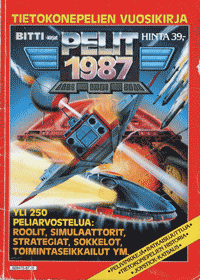 1987
1987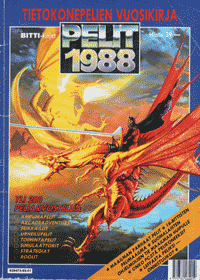 1988
1988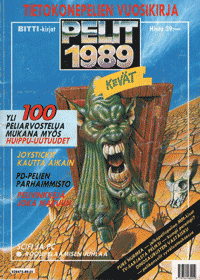 1989 Kevät
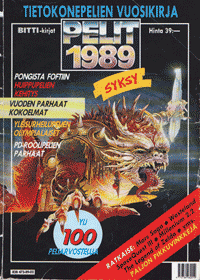 1989 Syksy
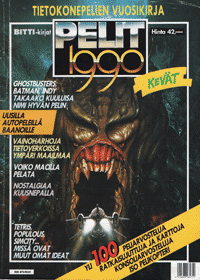 1990 Kevät
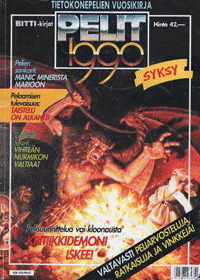 1990 Syksy
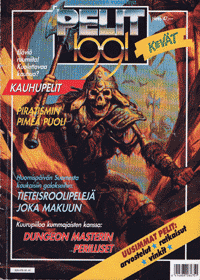 1991 Kevät
 1991 Syksy
Yleisurheilu
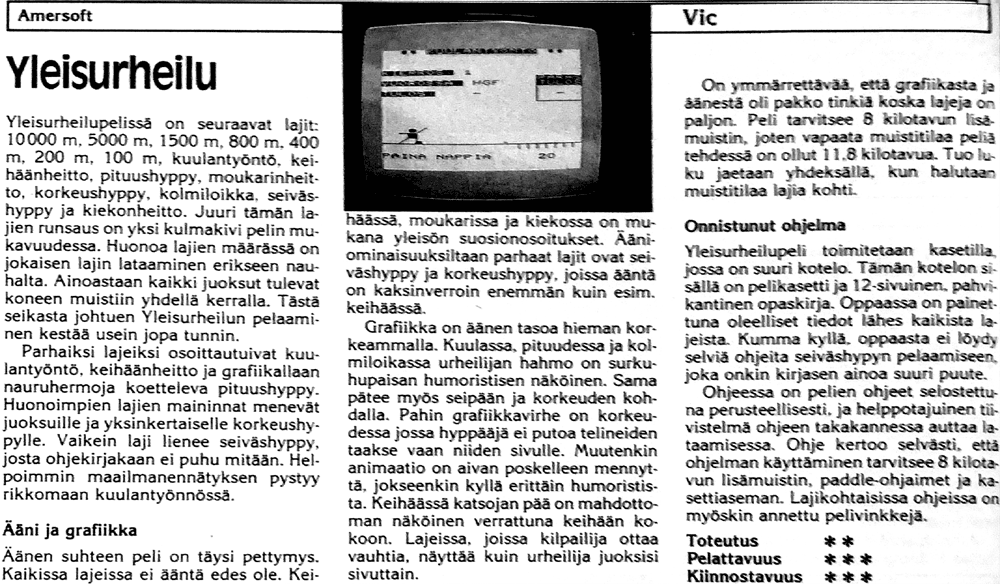
Yleisurheilu1987Pysyvä linkkiYleisurheilupelissä on seuraavat lajit: 10 000 m, 5000 m, 1500 m, 800 m, 400 m, 200 m, 100 m, kuulantyöntö, keihäänheitto, pituushyppy, moukarinheitto, korkeushyppy, kolmiloikka, seiväshyppy ja kiekonheitto. Juuri tämän lajien runsaus on yksi kulmakivi pelin mukavuudessa. Huonoa lajien määrässä on jokaisen lajin lataaminen erikseen nauhalta. Ainoastaan kaikki juoksut tulevat koneen muistiin yhdellä kerralla. Tästä seikasta johtuen Yleisurheilun pelaaminen kestää usein jopa tunnin.
Parhaiksi lajeiksi osoittautuivat kuulantyöntö, keihäänheitto ja grafiikallaan nauruhermoja koetteleva pituushyppy. Huonoimpien lajien maininnat menevät juoksuille ja yksinkertaiselle korkeushypylle. Vaikein laji lienee seiväshyppy, josta ohjekirjakaan ei puhu mitään. Helpoimmin maailmanennätyksen pystyy rikkomaan kuulantyönnössä.
Ääni ja grafiikka
Äänen suhteen peli on täysi pettymys. Kaikissa lajeissa ei ääntä edes ole. Keihäässä, moukarissa ja kiekossa on mukana yleisön suosionosoitukset. Ääniominaisuuksiltaan parhaat lajit ovat seiväshyppy ja korkeushyppy, joissa ääntä on kaksinverroin enemmän kuin esim. keihäässä.
Grafiikka on äänen tasoa hieman korkeammalla. Kuulassa, pituudessa ja kolmiloikassa urheilijan hahmo on surkuhupaisan humoristisen näköinen. Sama pätee myös seipään ja korkeuden kohdalla. Pahin grafiikkavirhe on korkeudessa jossa hyppääjä ei putoa telineiden taakse vaan niiden sivulle. Muutenkin animaatio on aivan poskelleen mennyttä, jokseenkin kyllä erittäin humoristista. Keihäässä katsojan pää on mahdottoman näköinen verrattuna keihään kokoon. Lajeissa, joissa kilpailija ottaa vauhtia, näyttää kuin urheilija juoksisi sivuttain.
On ymmärrettävää, että grafiikasta ja äänestä oli pakko tinkiä koska lajeja on paljon. Peli tarvitsee 8 kilotavun lisämuistin, joten vapaata muistitilaa peliä tehdessä on ollut 11,8 kilotavua. Tuo luku jaetaan yhdeksällä, kun halutaan muistitilaa lajia kohti.
Onnistunut ohjelma
Yleisurheilupeli toimitetaan kasetilla, jossa on suuri kotelo. Tämän kotelon sisällä on pelikasetti ja 12-sivuinen, pahvikantinen opaskirja. Oppaassa on painettuna oleelliset tiedot lähes kaikista lajeista. Kumma kyllä, oppaasta ei löydy selviä ohjeita seiväshypyn pelaamiseen, joka onkin kirjasen ainoa suuri puute.
Ohjeessa on pelien ohjeet selostettuna perusteellisesti, ja helppotajuinen tiivistelmä ohjeen takakannessa auttaa lataamisessa. Ohje kertoo selvästi, että ohjelman käyttäminen tarvitsee 8 kilotavun lisämuistin, paddle-ohjaimet ja kasettiaseman. Lajikohtaisissa ohjeissa on myöskin annettu pelivinkkejä.
Yleisurheilu1987PermalinkThe Yleisurheilu game has the following events: 10,000 m, 5000 m, 1500 m, 800 m, 400 m, 200 m, 100 m, shot put, javelin, long jump, hammer throw, high jump, triple jump, pole vault and discus. It is precisely this wealth of events that is one of the cornerstones of the game's appeal. The downside of having so many events is that each one has to be loaded separately from tape. Only the running events all go into the machine's memory in one go. Because of this, a session of Yleisurheilu often lasts as long as an hour.
The best events turned out to be the shot put, the javelin and the long jump, whose graphics put your funny bone to the test. The worst-event citations go to the runs and the simplistic high jump. The hardest event is probably the pole vault, about which even the manual says nothing. The world record is easiest to break in the shot put.
Sound and graphics
As far as sound goes, the game is a total disappointment. Not every event even has sound. The javelin, the hammer and the discus come with the crowd's applause. The best events for sound are the pole vault and the high jump, which have twice as much sound as, for example, the javelin.
The graphics are a notch above the level of the sound. In the shot, the long jump and the triple jump the athlete's figure looks tragicomically hilarious. The same goes for the pole vault and the high jump. The worst graphical flaw is in the high jump, where the jumper falls not behind the uprights but off to the side of them. On the whole the animation has gone completely down the drain, though admittedly it is rather hilarious. In the javelin, the spectator's head looks ridiculous compared to the size of the javelin. In the events where the competitor takes a run-up, it looks as if the athlete were running sideways.
It's understandable that the graphics and sound had to be skimped on, since there are so many events. The game needs an 8 kilobyte memory expansion, so there was 11.8 kilobytes of free memory to work with when the game was written. Divide that figure by nine to get the memory per event.
A successful program
The Yleisurheilu game comes on cassette, in a large case. Inside the case are the game cassette and a 12-page guidebook with card covers. The guide has the essential information on almost all the events printed in it. Strangely enough, the guide has no clear instructions for playing the pole vault, which is in fact the booklet's only major shortcoming.
The manual explains the instructions for the games thoroughly, and an easy-to-follow summary on the manual's back cover helps with loading. The manual states clearly that using the program requires an 8 kilobyte memory expansion, paddle controllers and a cassette drive. The instructions for each event also include playing tips.